

Procurement Paralysis: The Pregnant Pause of Government Inaction
Governments around the globe are caught in a scandal-ridden, bureaucratic quagmire, unable—or unwilling—to take the decisive actions needed to fix the mess they’ve made of public procurement. Like deer frozen in the headlights, officials are paralyzed, seemingly waiting for the storm to pass, all while taxpayers foot the bill for their indecision.
Canada’s Procurement Quagmire: A Case Study in Complacency
Take Canada, for instance. It’s hard to ignore the trail of procurement scandals that have eroded public trust. Remember the “green slush fund” debacle? Funds meant to save the environment mysteriously ended up elsewhere. And let’s not forget the ArriveCAN or ArriveSCAM as it has become known as, a monument to excessive spending with very little to show for it. Yet, despite the outcry, what do we get? A few limp-wristed promises, a new office here, a committee there, and business as usual.
It’s the same old story: scandal breaks, politicians frown and promise change, studies are commissioned, audits are performed, and recommendations are made. But when the dust settles, we can demonstrably say nothing meaningful happens. The system remains broken, and the cycle of corruption and incompetence continues unchecked.
Global Inaction: The Ripple Effect of Paralysis
Canada isn’t alone as far away as Australia whose government contracts are riddled with similar controversies, and in the United States, the Department of Defense has been a poster child for procurement malpractice. Overpriced equipment, sweetheart deals, and a general disregard for taxpayer money have become the norm.
This, what seems to be a global trend is alarming not just because of the scandals themselves but because of the utter lack of meaningful response. The procurement departments are seemingly frozen, incapable of moving forward, and trapped in a cycle of fear and inaction. It’s like they’re waiting for a saviour who will never come.
This procurement paralysis isn’t unique to Canada – it’s a global pandemic of bureaucratic incompetence. In the United States, the F-35 fighter jet program has become synonymous with cost overruns and delays, with lifetime costs ballooning to over $1.7 trillion
Australia’s National Broadband Network has faced similar issues, with costs nearly doubling from initial estimates to $51 billion. These global failures don’t just waste money – they erode public trust, hinder economic growth, and leave nations vulnerable in an increasingly competitive world.”
Why Are We Stuck?
The reasons behind this paralysis are as complex as the complex regulations that govern procurement processes:
- Lack of Transparency: Secretive processes provide fertile ground for misconduct, and nobody seems eager to let the sunlight in.
- Insufficient Oversight: The watchdogs are either asleep or complicit, and irregularities slip through the cracks, unchecked.
- Political Interference: Decisions are often made not based on what’s best for the public, but on what’s best for politicians and their cronies.
- Regulatory Complexity: Overcomplicated rules are a breeding ground for exploitation, and those who benefit have no incentive to simplify the system.
The consequences? Delays, wasted resources, and missed opportunities. But most damningly, a continued erosion of public trust. And who can blame the public for losing faith? The officials who are supposed to safeguard our interests are too scared to make a move, paralyzed by the very scandals they’re meant to prevent.
Recent Scandals
Recent procurement scandals have underscored significant issues within Canada’s government contracting processes. From the controversial ArriveCAN app to broader IT procurement failures, these incidents highlight a troubling pattern of mismanagement, lack of competition, and concentration of contracts among a few major firms.
Initially budgeted at $80,000, its costs exploded to over $54 million. Even more shockingly, the app continued to send erroneous quarantine orders to travellers months after the requirements were lifted. When pressed for details, the Canada Border Services Agency couldn’t even provide a breakdown of how the money was spent. This isn’t just incompetence – it’s a complete breakdown of accountability and oversight.”
Together, these issues raise serious concerns about the effectiveness and fairness of government spending practices. Here’s an overview of the key problems:
- The ArriveCAN app has become a major procurement scandal for the Canadian government. Key issues include:
- Ongoing investigations by parliamentary committees and the RCMP into contracting practices used for the app’s development.
- Allegations of procurement misconduct surrounding the app.
- The app’s development has been criticized for cost overruns and lack of transparency.
Other Procurement Issues
- A 2024 study found that the federal government’s IT procurement rules violate nearly every globally accepted best practice.
- The study noted overly long and costly contracts, a lack of supplier diversity, and failure to prioritize open-source options.
- Nearly a quarter of the government’s $20 billion spent on IT contracts since 2017-2018 went `to just three firms: IBM Canada, Bell Canada and Microsoft Canada.
- In March 2024, investigations by Public Services and Procurement Canada (PSPC) uncovered instances of suppliers fraudulently billing the Government of Canada.
- An individual was found to have undertaken contract work with 8 separate government departments and Crown corporations through 8 different primary contractors between January 2020 and June 2021, leading to overbilling.
Government Response
In response to these issues, the Canadian government has announced several measures:
- Launching a new Office of Supplier Integrity and Compliance (OSIC) program to enhance oversight.
- Expanding grounds for supplier debarment or suspension.
- Increasing use of data analytics to identify potential fraud.
- Enhancing transparency requirements for professional services contracts.
- Strengthening oversight of departmental contracting processes.
A Call to Attention: Will This Time Be Any Different?
The recent findings from the Office of the Auditor General of Canada should not become just another footnote in the long history of government audits. Over the past two decades, hundreds of audits have unearthed inefficiencies, mismanagement, and other systemic issues within federal operations. Despite repeated recommendations, the same problems often resurface, leading to a justified public skepticism about whether anything will actually change this time.
Why should we believe that this audit’s recommendations will lead to real reform? The truth is, without a fundamental shift in how these recommendations are implemented and enforced, there is little reason to expect a different outcome. The cycle of audit, recommend and ignore cannot continue if we want to see meaningful improvements in government accountability and efficiency.
This time, let’s ensure that these findings do not fade into the blind spot of bureaucratic inertia. Real change demands more than just acknowledging problems—it requires decisive action and the political will to follow through on the recommendations made. Without this, the audits will remain little more than exercises in futility, and the public trust will continue to erode
Breaking the Cycle: It’s Time for Action, Not More Talk
Enough with the pregnant pauses. Governments need to stop tiptoeing around the problem and start taking bold, decisive action. Here’s how:
- Embrace Transparency: Open up the bidding processes and let the public see what’s really going on behind closed doors. No more backroom deals.
- Strengthen Oversight: Independent review boards with real teeth need to be established, and whistleblowers must be protected, not punished.
- Simplify Regulations: Cut through the bureaucratic nonsense that serves only to confuse and obscure. Streamlined rules will close loopholes and make it harder for the bad actors to operate.
- Promote Accountability: Hold those responsible for misconduct to account. And I’m not talking about a slap on the wrist—real consequences for real infractions.
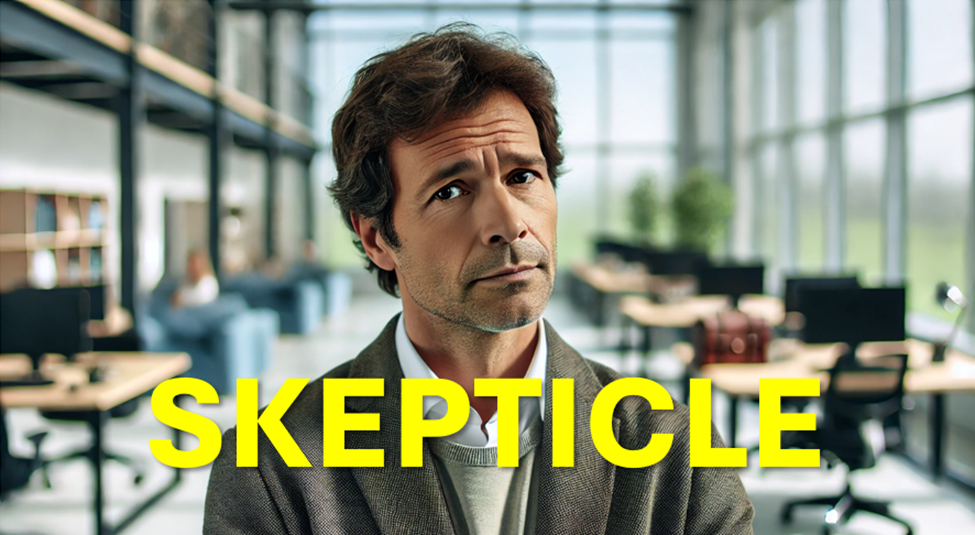
The current strategy—if you can call it that—of acknowledging the problem, nodding in agreement, and then doing nothing is not just ineffective; it’s destructive. It’s time to disrupt this cycle of scandal and inertia. We have the tools, the technology, and the know-how to fix these issues, but only if we muster the will to use them.
Déjà Vu: The Government’s Eternal Loop of Inaction
Let’s talk about government procurement—again. You’d think that after decades of audits, recommendations, and solemn nods from officials, we’d have ironed out the wrinkles by now. But here we are, once again looking at an audit, this time from 2021, highlighting the same issues that have been festering for years. Report 1—Procuring Complex Information Technology Solutions was supposed to be a wake-up call, a moment for the government to get its act together. Spoiler alert: it wasn’t.
Remember, this audit didn’t just pop out of nowhere. It scrutinized practices from 2018 to 2020, but the problems it found—lack of training, poor stakeholder engagement, and insufficient integrity checks—aren’t exactly new revelations. These issues have been around longer than some of the government officials tasked with solving them. Yet, here we are, with the government once again agreeing with the recommendations, promising to do better, and—wait for it—likely falling into the same pattern of inaction.
Let’s be honest: it feels like we’re stuck in a bureaucratic version of “Groundhog Day.” The report’s findings are just the latest verse in a long, tedious ballad of government inefficiency. We’re talking about the same song and dance—announce an audit, acknowledge the issues, commit to change, and then quietly shelve the whole thing until the next scandal hits. Rinse and repeat.
So why should we believe this time will be any different? Are we supposed to suddenly have faith that the same people who’ve been asleep at the wheel for years are finally going to pull a 180 and start driving straight? The reality is, without serious, sustained pressure from the public and watchdogs, this report will just be another in a long line of ignored wake-up calls. It’s time to break the cycle, not just hit snooze until the next audit comes along.
If you’re getting tired of this repetitive storyline, you’re not alone. But until we see real, tangible changes—not just more empty promises—expect to be reading about the same issues in the next audit report, and the one after that.
The Silver Bullet Syndrome: When Good Solutions Meet Bad Habits
How many of us have walked into a new job, bright-eyed and optimistic, only to hear the familiar tale of woe about the company’s ongoing struggles—especially in managing projects? You sit through endless meetings, join work sessions, and watch the team flirt with the latest “game-changing” tools. At first, everything seems to click. The new system is the answer to all prayers, the silver bullet that will finally kill off the inefficiencies, miscommunications, and missed deadlines that have plagued the company for years.
But then reality sets in. The honeymoon phase fades, and it turns out that this shiny new tool doesn’t manage itself. Someone needs to take the wheel, to guide the team through the process, and—here’s the kicker—everyone needs to follow the rules. And guess what? Those bad habits, the ones that got the company into trouble in the first place, start creeping back in. People skip steps, cut corners, and before long, the “perfect solution” is collecting dust in the corner while the search for the next silver bullet begins.
The truth is, I’ve seen project managers who won’t even use MS Project to manage their timelines. They shy away from the simplest of PMI (Project Management Institute) teachings, preferring to rely on gut instinct rather than proven methodologies. The management isn’t much better—many are so far removed from the actual work being done that they might as well be managing from another planet. No amount of software or shiny new tools can bridge that gap.
Here’s the hard truth: It’s not that companies don’t have good solutions—it’s that they lack the discipline to follow through with the rigour required to make those solutions work. The problem isn’t the technology; it’s the process. And more often than not, it’s the people who fail to adhere to the process that are the real culprits.
I’ve seen this firsthand during my years in municipal government. The challenges they faced when I retired were the same ones they were grappling with when I started. Why? Because while the tools and technologies evolved, the commitment to following the processes didn’t. The cycle of adopting new solutions only to abandon them when they don’t magically solve all problems continues unabated.
So, when the next big thing is rolled out, it might be worth asking: Is this really the solution we need, or should we focus on finally getting our act together and following the processes that underpin any good system? Until organizations mature enough to embrace process discipline, the search for that elusive silver bullet will go on—unsuccessfully.
A Call to Arms: Let’s End the Inertia
The public deserves better. We deserve a government that isn’t afraid to act, a system that works in our interest, not against it. We can’t afford to let procurement departments remain frozen, afraid to make a move. It’s time to unfreeze the system, to embrace innovation, and to take the bold steps necessary to restore trust and ensure that public funds are used efficiently and ethically.
Some suggestions of how we can make positive change:
An independent Public Procurement Oversight Committee with real teeth, empowered to investigate and penalize misconduct.
- A complete rewrite of procurement regulations, prioritizing transparency and competition.
- Mandatory public disclosure of all bids, contracts, and project outcomes.
- A ‘three strikes’ policy for contractors and officials involved in procurement scandals, with permanent debarment after repeated violations.
So, I say to those in power: Stop dithering. Stop studying. Stop commissioning reports that gather dust on a shelf. Start acting. Because if you don’t, the next scandal isn’t just inevitable—it’s already in the making.



Leave a comment