
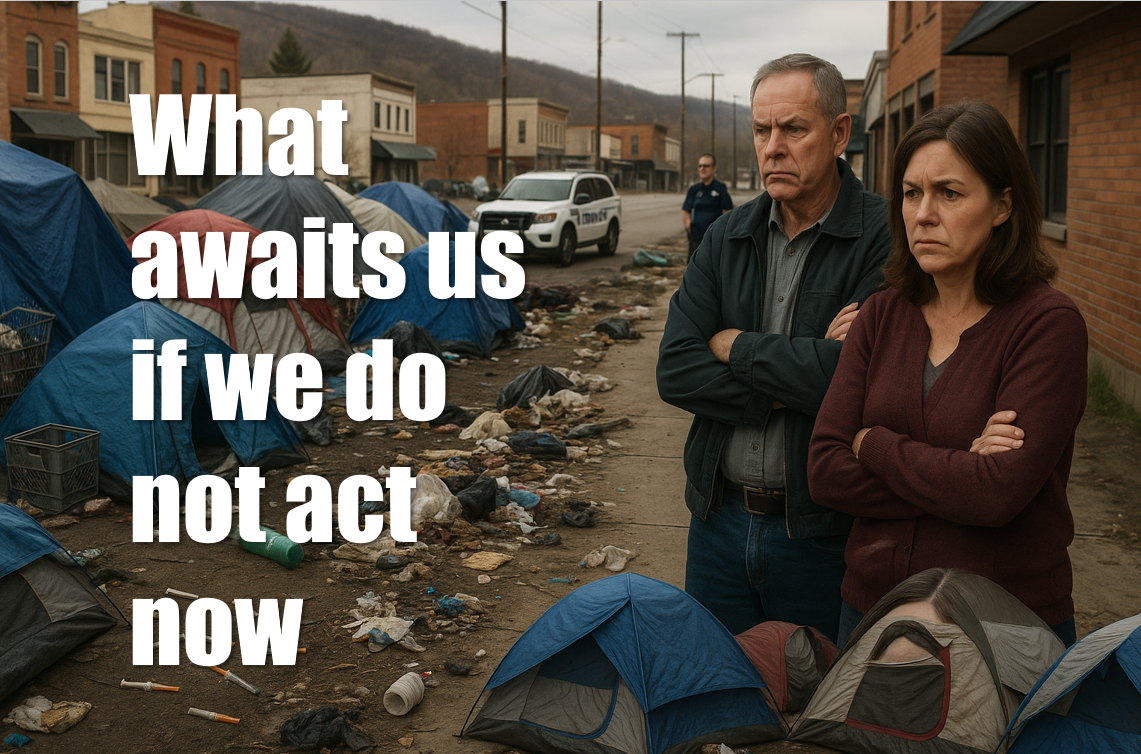
Halton Hills, listen up: Your leaders’ decision to “monitor” the growing homeless encampments sprouting in our public spaces isn’t compassionate governance—it’s outright negligence, a cowardly sit-on-your-hands approach that’s already proven disastrous in cities across Ontario and Canada. With 10 active encampments across Halton Region as of June 2025—housing about 25 unsheltered individuals, primarily in Burlington but spilling into Oakville and beyond—and a staggering 185% increase in unsheltered homelessness since 2018, the writing is on the wall.
Shelters are bursting at 140% capacity, and homelessness has surged 10% since 2021 alone.
Yet, instead of enforcing bylaws against unauthorized camping—the same rules that would slap a fine on any ordinary resident pitching a tent in a park—your council opts for passive observation, throwing $14 million in provincial funds at “programs and supports” for 2025-2026, including $5.06 million earmarked for “mitigating” encampments. See email response.
This isn’t leadership; it’s hoping the problem evaporates while it festers, inviting more chaos, danger, and heartbreak. History screams that this path leads straight to catastrophe—why repeat it?
Look at the hard facts from right here in Ontario, where “monitoring” has repeatedly backfired into explosive growth and crippling costs. In Toronto, initial pandemic-era monitoring turned a handful of tents into over 200 across 72 parks by March 2024, ballooning to 283 encampments city-wide by early 2025. What started as a few isolated sites in places like Moss Park mushroomed as word spread of “permissive” outdoor living, drawing in more vulnerable people alongside those with substance issues, criminal activity, and worse.
The result? Fires, violence, health crises, and a forced clearance in 2021 that cost nearly $2 million for just three parks—complete with police helicopters, arrests, and injuries.
Province-wide, Ontario now grapples with at least 1,400 encampments, amid a 25% homelessness surge to over 80,000 people in 2024, with shelters at 140%+ capacity and housing costs devouring 45% of tenants’ incomes.
Municipalities shell out $1 billion annually on these crises, including skyrocketing expenses for security, legal battles, and clean-ups after encampments become entrenched.
Hamilton tells the same grim tale: A monitoring protocol from 2020-2022 let encampments linger, leading to unchecked growth, fires, pests, and crime. Despite outreach, refusals piled up, forcing evictions with arrests and court fights that drained resources.
Even in mid-sized Ontario spots, monitored sites housing 50-100 people devolved into unsafe havens for drug trafficking and violence, demanding eventual clearances at “substantial” unquantified costs for policing and remediation.
Nationally, 63% of communities reported encampment spikes post-pandemic, with 20-25% of Canada’s 35,000+ daily unhoused living in them—growth fueled by delayed action that signals “come one, come all.”
Halton itself needs 165 more supportive housing units just to tread water, but your “mitigation” funds—deemed “woefully inadequate” by local leaders—won’t build them overnight.
This isn’t abstract—it’s headed your way, Halton Hills. Your region’s own data paints a ticking bomb: A 10% homelessness jump in four years, unsheltered numbers exploding, and encampments already dotting public lands.
Monitoring invites escalation: More tents arrive as rumours of leniency spread, attracting not just the desperate but opportunists who amplify dangers like overdoses, theft, and assaults on residents. Public parks become no-go zones, families avoid trails, and businesses suffer. Why wait for the inevitable—fires raging, health hazards mounting, and taxpayer dollars hemorrhaging on emergency responses—when acting now could avert it all? Enforce the rules fairly: If I can’t camp in a park without a ticket, neither should anyone else. Pair removals with real supports, like the province’s new enforcement tools under Bill 6, which empower municipalities to dismantle encampments swiftly.
Show leadership by tackling this head-on, not hiding behind “what else can be done?” excuses.
Hoping for the best isn’t a plan—it’s a betrayal of the overwhelming majority in Halton Hills who crave safe, clean communities but stay silent, fearing backlash from vocal minorities who romanticize inaction as “compassion.” Retaliation from activists or social media mobs silences dissent, but the stats don’t lie: Permissiveness breeds regret. Your council’s dithering repeats every failed experiment in Toronto, Hamilton, and beyond—don’t let Halton Hills become the next cautionary tale. Act decisively now: Clear the encampments humanely, invest in housing solutions, and reclaim our spaces. The public demands it, the facts demand it, and history demands it. Inaction isn’t mercy—it’s madness.
Public Health Risks from Unsanitary Conditions and Disease Spread. Encampments often lack basic sanitation like running water or toilets, creating breeding grounds for infectious diseases that endanger everyone nearby. For instance:
- Hepatitis A outbreaks have been directly linked to homeless encampments due to poor hygiene and waste accumulation. In California alone, a 2017-2018 outbreak tied to unsheltered homelessness infected over 700 people and killed 21, spreading via fecal contamination in public spaces.
- Unsheltered homeless populations face higher rates of chronic diseases, serious mental illness, and substance abuse, but the ripple effect includes community exposure to tuberculosis, HIV, and other communicable illnesses through shared environments.
2 sources
- In cities like Los Angeles and San Francisco, encampments have led to increased sleep disruption for residents due to noise and exposure, worsening overall public health, while the homeless endure amplified risks from weather and poor conditions.
These aren’t assumptions—they’re documented public health crises that force cities to spend millions on cleanups and medical responses, all while diseases spread to housed neighbours.
Discarded Needles and Drug Paraphernalia: A Direct Threat to Kids and Pets
Suggesting we “don’t assume the worst” overlooks the epidemic of needle litter in encampment areas, which poses immediate dangers:
- In Boston and other cities, discarded needles from drug use in encampments have led to children and pets getting pricked, risking HIV, hepatitis, or other blood-borne diseases—CBS News reported cases where kids were exposed in public parks.
- Biohazard cleanup experts note that encampments frequently contain used needles, blood, and human waste, creating ongoing risks during and after occupation.
- In Portland, Oregon, where encampments proliferated, overdose victims have been found in tents, and fentanyl’s presence has turned public spaces into hazard zones, exacerbating a drug crisis that kills thousands annually.
This isn’t about stigmatizing people—it’s about preventing avoidable injuries and epidemics, as seen in West Coast cities where “harm reduction” alone failed to contain the fallout.
Increased Crime and Theft in Surrounding Neighbourhoods. Encampments don’t exist in a vacuum; they often correlate with spikes in petty crime, break-ins, and theft, eroding community safety:
- In Los Angeles, crimes at homeless encampments doubled from 2019 to 2020, including assaults and thefts that spilled into nearby areas.
- A 2022 Seattle study showed that while city-wide property crime didn’t always rise, specific encampments fueled localized increases in theft and break-ins, with residents reporting vehicle crimes and fights. 2 sources
- In Portland, neighbourhoods near encampments saw heightened vehicle break-ins and property theft, contributing to a broader sense of insecurity that drove residents away.
Homeless individuals are more often victims than perpetrators, but dense, unregulated encampments amplify vulnerabilities and attract criminal activity, as evidenced in high-density areas like LA’s Skid Row.
Fire Hazards: A Ticking Time Bomb
Open flames for cooking or heating in tents create massive fire risks, especially in dry urban areas:
- Los Angeles saw homeless-related fires nearly double from 2020 to 2023, totaling over 13,900 incidents, many starting in encampments and spreading to nearby structures or electrical lines.
- In Portland, thousands of fires linked to encampments went underreported, but records show they strained fire departments and endangered lives.
- Santa Fe, New Mexico, reported 31 encampment-origin fires in just the first half of 2025, highlighting how combustible materials and unsafe heating turn public spaces into hazards.
- Even in Chicago, a recent tent fire in a park encampment underscored ongoing dangers to both the homeless and surrounding communities.
These fires not only destroy belongings but also overburden emergency services and risk lives—far from a benign “tent in the park.”Lessons from Cities That Let Encampments NormalizeCities like San Francisco, Los Angeles, Seattle, and Portland provide cautionary tales of what happens when encampments go unaddressed:
- San Francisco: Once-tolerant policies led to blighted streets, with encampments causing crime spikes, health crises (e.g., overdose deaths), and business flight. The city has cleared thousands of tents but still grapples with fallout, driving residents out and costing billions in responses.
- Los Angeles: Encampments exploded, leading to doubled fire incidents, increased crime at sites, and public spaces becoming unusable. Sweeps became necessary after neighbourhoods reported theft and unsanitary conditions, but delays worsened the crisis.
- Seattle and Portland: Apathy toward boundaries allowed encampments to flood streets, resulting in trash piles, drug use, and economic hits—businesses closed, families sold homes near camps, and overdose bodies were found during cleanups. Portland’s downtown became a symbol of decline, with residents fleeing due to safety fears. sources
Closer to home, Vancouver’s Downtown Eastside shows similar patterns: unchecked encampments have led to needle litter, crime, and health outbreaks, turning vibrant areas into no-go zones.
These cities didn’t “turn into shitholes” overnight—it started with tolerance that normalized the issues, making them harder (and costlier) to fix.
Empathy without action is what got us here. We need robust shelters, mental health support, and addiction treatment to prevent homelessness, but that doesn’t mean sacrificing public safety in the process. Ignoring these facts doesn’t help the homeless—it just ensures more suffering for everyone. Let’s push for real solutions, not denial.
 marksdeepthoughts.ca
Leave a comment