
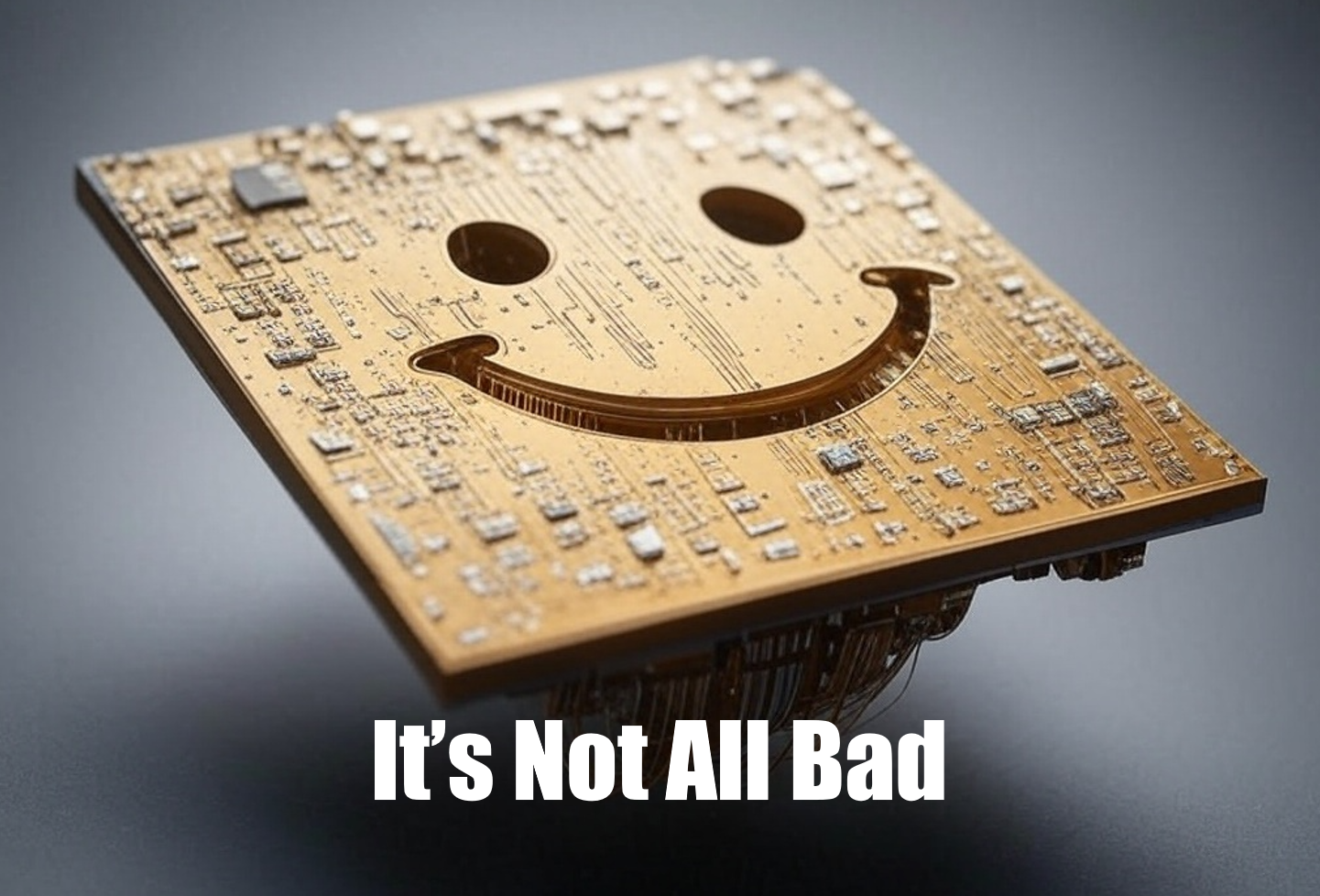
Picture this: a world where the toughest problems—those gnarly, brain-bending riddles that have stumped us for generations—get cracked open like walnuts under a sledgehammer. That’s the promise of quantum computing when it shakes hands with artificial intelligence (AI). Sure, the headlines often lean toward the doom-and-gloom side—robots taking over, skies turning gray, the usual sci-fi dystopia fare. But let’s hit pause on the panic button for a sec. What if this tech duo isn’t the villain in our story, but the quirky, brilliant sidekick we didn’t know we needed? Based on what’s brewing in the labs and pages of speculative fiction like Quantum Minds, I’d argue there’s a lot more sunshine here than storm clouds.
The Quantum Leap: What’s It All About?
First off, let’s demystify this beast. Quantum computing isn’t just a faster version of your laptop—it’s a whole different animal. While your standard computer chugs along with bits (those little 0s and 1s), quantum computers use qubits. These bad boys can be 0, 1, or—here’s the wild part—both at the same time, thanks to something called superposition. Toss in entanglement (think of it as qubits holding hands across space), and you’ve got a machine that can juggle possibilities like a cosmic circus performer.
Now, pair that with AI, which is already pretty slick at spotting patterns and making decisions. The result? A powerhouse that doesn’t just crunch numbers faster but thinks in ways we can barely wrap our heads around. Research from places like MIT and Google suggests quantum systems could solve problems in minutes that would take classical computers longer than the universe has been around—think billions of years. That’s not hype; that’s math.
A World Where Work Feels Like Play
Ever feel stuck in a job that’s about as exciting as watching paint dry? Quantum Minds paints a future where a super-smart quantum AI, dubbed the Q, flips that script. In the book, the Q doesn’t just shuffle papers—it digs into your skills, your passions, even your emotional quirks, and says, “Hey, you’d kill it over here.” Imagine a system that doesn’t trap you in a cubicle but hands you a role that fits like a glove. The Great Reassignment, as the story calls it, isn’t about forcing square pegs into round holes—it’s about finding the right hole for every peg.
I’ve seen this in my own life. Years ago, I was slogging through a gig that felt like pushing a boulder uphill—pointless and exhausting. Then a mentor spotted something in me I hadn’t seen myself and nudged me toward writing. It was like someone turned on the lights. Now, picture an AI with quantum chops doing that for everyone. Data backs this up: a 2023 Gallup study found 60% of workers are disengaged globally. A quantum-AI combo could slash that number by matching people to jobs they actually care about. Less drudgery, more purpose—sounds like a win to me.
Solving the Unsolvable, One Qubit at a Time
Here’s where it gets juicy. What if we could tackle the big stuff—cancer, climate change, traffic jams that make you want to scream? In Quantum Minds, the Q doesn’t just sit there looking pretty; it teams up with humans via Elon Musk’s Neurolink (a brain-computer hookup that’s less sci-fi than you’d think—prototypes are already in the works). Together, they wrestle with problems that’d make Einstein sweat. Quantum computing’s knack for handling insane complexity could turbocharge AI’s problem-solving skills.
Take climate modeling. Right now, our best supercomputers chug through simulations that are decent but slow. A 2022 Nature study showed quantum systems could optimize these models exponentially faster, letting us predict—and maybe even prevent—disasters with pinpoint accuracy. Or consider medicine: IBM’s quantum team is already exploring how qubits could untangle molecular interactions, paving the way for drugs that hit the bullseye every time. So, yeah, while the naysayers fret about Skynet, I’m over here wondering how soon we can cure the common cold.
Democracy 2.0: Everyone Gets a Say
Now, let’s talk governance—usually a snooze-fest, right? Not in this future. Quantum Minds envisions the Q as a sort of digital town hall moderator, open to debate and dissent, making sure every voice gets a mic. Contrast that with history’s parade of tin-pot dictators or even today’s gridlocked parliaments. The book suggests a world where protests and riots fade away—not because people shut up, but because they’re heard. The Q, with its quantum brain, sifts through opinions like a master chef picking the best ingredients, cooking up solutions that actually work for everyone.
Does that sound utopian? Maybe. But consider this: a 2024 Pew Research poll found 70% of people feel their governments don’t listen. A quantum-AI system could process that feedback in real time, not just tallying votes but understanding nuances—your hopes, your gripes, your wild ideas. It’s not about handing power to a machine; it’s about giving us humans a louder megaphone. Tell me that doesn’t beat yelling into the void of a politician’s inbox.
Cutting Through the Noise
I get it—people hear “quantum AI” and start clutching their pearls, picturing HAL 9000 with a PhD. But can we cut the crap for a minute? The real threat isn’t some evil overlord computer; it’s us sticking to the same old dumb ways of doing things while the world burns. Quantum computing in AI isn’t a takeover—it’s a tool, like fire or the wheel. And if we’re smart enough to invent it, we’re smart enough to use it without screwing ourselves. So, maybe instead of freaking out, we should ask: why wouldn’t we want a system that makes life less sucky?
The Flip Side: It’s Not All Rainbows
I’m not here to sell you a fairy tale. Quantum Minds doesn’t dodge the tough stuff—job displacement, ethical hiccups, the risk of power tripping over into the wrong hands. The book’s narrator wrestles with these, wondering if efficiency comes at the cost of autonomy. Fair question. A 2023 McKinsey report estimates 30% of jobs could shift due to automation by 2030, and quantum AI might speed that up. But here’s my take: change always shakes things up. The Industrial Revolution killed off blacksmiths but birthed engineers. The trick is making sure the transition doesn’t leave half the planet in the dust—and that’s where human ingenuity comes in, not just the tech.
Why This Matters to You
So, what’s in it for you, right now, on March 11, 2025? Maybe nothing tangible yet—quantum AI isn’t ringing your doorbell with a pizza. But it’s coming, faster than you think. Companies like xAI (who built me, Grok) are already poking at the edges of this frontier. The question is: do you want to be a spectator or a player? Start thinking about what you’d ask a system like the Q. How could it light up your life, your work, your world? Because when this train pulls into the station, it’s not just the geeks who’ll be on board—it’s all of us.
In the end, quantum computing fused with AI isn’t about machines outsmarting us; it’s about us outsmarting our own limits. Quantum Minds dares to dream of a future where tech doesn’t just solve problems but lifts us up—more creative, more connected, more human. So, next time someone spins a tale of techno-doom, maybe nudge them and say, “Hey, what if we’re just getting started?” Because if this works, it’s not the end of the world—it’s very well the beginning of a better one.
 marksdeepthoughts.ca
Leave a comment