
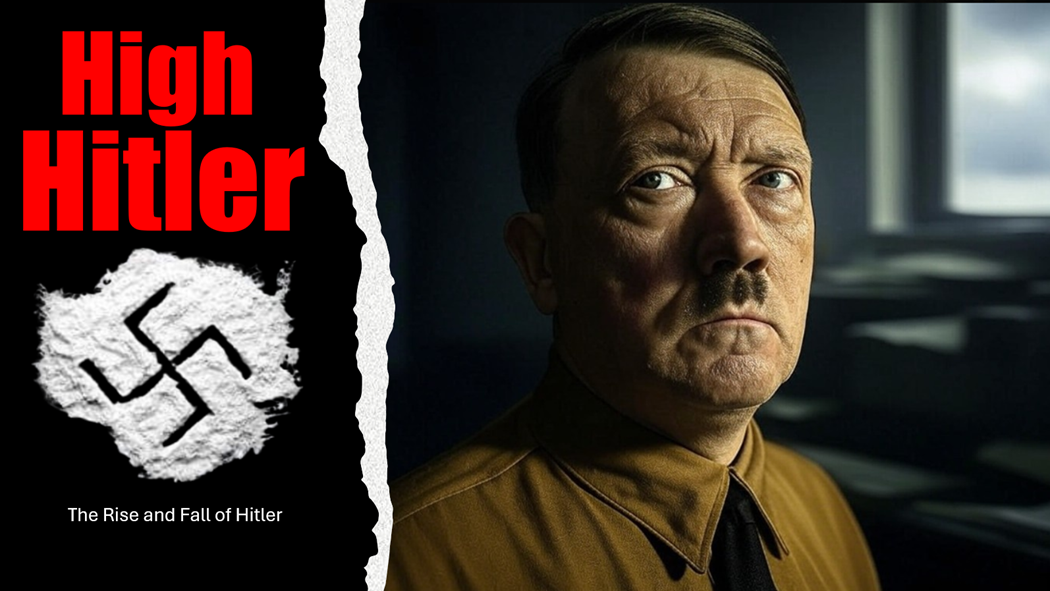
I. Introduction: The War Behind the War
World War II often conjures images of vast armies clashing, epic battles unfolding, and entire nations mobilizing for total war. However, beneath these grand narratives lies a personal saga that is both astonishing and unsettling: Adolf Hitler’s escalating reliance on prescription drugs. This lesser-known angle of the war invites us to consider how an individual’s health, including addiction, can influence the fate of nations.
Hitler’s drug use wasn’t just a footnote to the larger story of WWII; it may have been a silent yet powerful force shaping key decisions. From his early days as a charismatic figure rallying a disenfranchised population, Hitler evolved into a man heavily dependent on a cocktail of prescription medications that ranged from amphetamines to opiates. Understanding this transformation helps us see the war not only as a global conflict of ideologies and armies but also as a cautionary tale about the far-reaching consequences of personal health crises in positions of great power.
II. The Man Behind the Madness: Hitler’s Health Woes
Before delving into how drugs impacted Hitler’s decision-making, it’s important to understand the physical ailments that plagued him. Historical accounts and medical records indicate that he suffered from:
- Chronic Sinusitis
Frequent sinus infections and nasal issues were a source of ongoing discomfort, sometimes treated with cocaine solutions as prescribed by his personal physician. - Gastrointestinal Problems
Persistent stomach and intestinal troubles, possibly aggravated by a stressful lifestyle and poor diet. - Early Parkinson’s Disease
Observed tremors and stiffness that worsened over time, affecting his motor skills and possibly his emotional stability.
These medical issues, while common enough in isolation, became extraordinary in Hitler’s case because of the lengths to which he and his physician went to “treat” them, ultimately, with an alarming array of substances that would compromise his judgment at the height of the war.
I want to be clear however, this guy Hitler was like a twisted Breaking Bad storyline come to life—just your average megalomaniac junkie who, unfortunately for the planet, got way too much power. Now, was he hooked on some pretty hardcore pharmaceuticals? Absolutely. And did that eventually contribute to his downfall? You bet it did. And for that, maybe we can send Big Pharma a thank-you note—if we can pry them away from their latest profit margins.
But let’s be clear: addiction is a terrible thing, no question. Yet I’m not shedding a single tear for this man. None. Zero. Zilch. Because being strung out on some chemical cocktail isn’t what made him a genocidal maniac. The vile ideology, the hatred, the utter lack of humanity—that’s on him. He doesn’t get a pass because he was popping pills like they were Tic Tacs. That’s where we all must draw the line. So, yes, addiction is a serious issue, and we can acknowledge that. But spare me the pity party for Hitler, I’ve got none to give.
III. Dr. Theodor Morell: The Enabler in the White Coat
Central to Hitler’s pharmaceutical saga is Dr. Theodor Morell, a physician whose methods straddled the line between cutting-edge and reckless. Morell gained Hitler’s trust by quickly providing relief for the Führer’s various ailments, using substances that included:
- Amphetamines (commonly found in early stimulant drugs, sometimes referred to by brand names like Pervitin)
- Opiates such as Eukodal (brand name for oxycodone)
- Cocaine solutions used nasally for sinus issues
- Vitamin Cocktails that were often spiked with stimulants
Morell’s reputation has long been controversial. Some historians argue he was simply out of his depth and eager to please his most famous patient, while others suggest he was a profiteer who relished his closeness to power. Either way, Morell’s liberal prescriptions may have transformed Hitler from a forceful leader into a man desperate for a “chemical crutch” to keep him going.
IV. From Charisma to Chemical Dependency
By late 1941, as Germany faced prolonged conflict on multiple fronts, Hitler’s drug use escalated dramatically. Initially, these substances might have been administered to manage real pain and symptoms, but they soon became a psychological prop. Here’s how:
- Performance Enhancement
Hitler needed to project unwavering confidence during high-stakes meetings and public appearances. Amphetamines and other stimulants gave him a burst of energy and focus—at least temporarily. - Maintaining the Führer Myth
Part of Hitler’s power stemmed from his aura of invincibility. The drugs helped him stay active, energetic, and engaged, masking his deteriorating health from his inner circle and the public. - Escalating Dosages
As tolerance built, Morell’s notes indicate that dosages of certain substances had to be increased. This cycle of dependency mirrored modern patterns of addiction, where relief is short-lived and drives a need for ever-stronger doses.
Historians, such as Norman Ohler (author of Blitzed: Drugs in Nazi Germany), have suggested that these escalating prescriptions may have contributed to some of Hitler’s more erratic wartime decisions.
V. The Highs and Lows of Leadership Under the Influence
By 1942 and onward, Adolf Hitler’s reliance on drugs became ever more intertwined with his leadership style and strategic planning. The short-term boosts he experienced were often followed by severe crashes—both physically and mentally—that left him irritable, paranoid, and prone to impulsive decisions. Several key moments exemplify how his pharmaceutical dependence may have impacted the war:
- Erratic Strategic Choices
- Invasion of the Soviet Union (Operation Barbarossa): Launched in 1941, this massive campaign was not only disastrous in its timing (Russia’s harsh winter) but also in its underestimation of Soviet resilience. While drugs alone didn’t dictate this choice, the mood swings and overconfidence that came with stimulant use likely played a part in Hitler’s refusal to heed logistical warnings.
- Refusal to Retreat
- As the Eastern Front deteriorated, Hitler became notorious for rejecting any mention of withdrawal or strategic repositioning. Observers in his inner circle noted his increasing stubbornness and bursts of anger—behaviors consistent with prolonged stimulant use.
- Micromanagement of the Military
- High on amphetamines, Hitler would often obsess over minute tactical details, undermining his generals’ expertise. This micromanagement clogged the decision-making process and eroded the autonomy of capable military leaders like Erwin Rommel and Heinz Guderian.
- Isolation and Paranoia
- In his final years, Hitler retreated more deeply into his bunkers, convinced that betrayal lurked at every corner. Withdrawal symptoms—when supplies ran low—only intensified this paranoia, compounding the natural stress of a losing war.
VI. The Allies’ Unlikely Ally: A Self-Sabotaging Führer
Ironically, British and other Allied intelligence services recognized Hitler’s deteriorating judgment. As the war neared its climax, they shifted assassination efforts away from Hitler, preferring that the erratic dictator remain in power:
- Intelligence Calculations
- British intelligence reportedly concluded that a drug-addicted, paranoid Hitler made worse decisions than a capable Nazi replacement might. The Allies reasoned that if Hitler continued to lead, the German war effort would collapse faster.
- Public Morale and Propaganda
- Letting Hitler remain in control also served as a propaganda tool for the Allies. Each strategic blunder—fueled by his unstable state—became evidence of Nazi Germany’s inevitable downfall.
- Failed Plots
- Several plots to assassinate Hitler (e.g., the famous July 20 Plot of 1944) either failed or were foiled. But as the war wore on, there was less impetus for the Allies to try again. High-level Nazi officials themselves grew weary of Hitler’s unpredictability, yet no cohesive plan to remove him ever took firm hold.
Thus, Hitler’s drug problem became a paradoxical asset to the Allied powers. The leader who had once seemed unstoppable in the late 1930s had turned into a liability for his own regime, squandering Germany’s remaining resources and morale in the face of overwhelming opposition.
VII. Pharmaceuticals on the Battlefield: A Wider Phenomenon
While Hitler’s drug use commands the spotlight, he wasn’t the only figure in WWII reliant on stimulants and other substances. Amphetamines, for example, were widely distributed among soldiers in both the Axis and Allied forces to combat fatigue and boost alertness:
- Axis Powers
- Germany: The Wehrmacht used Pervitin (methamphetamine) extensively, helping troops stay awake during lightning-fast Blitzkrieg operations.
- Japan: Known to give stimulants to kamikaze pilots and frontline troops for heightened aggression and reduced fear.
- Allied Powers
- Britain: Issued “wakey-wakey” pills (Benzedrine) to pilots during the Battle of Britain and other critical missions.
- United States: Amphetamines were provided to bomber crews and ground forces to maintain alertness on long campaigns.
This broader context underscores that WWII wasn’t just a clash of tanks and planes; it was also a pharmacological arms race in which chemical enhancements were seen as a legitimate part of warfare. However, the difference in Hitler’s case was the degree to which these substances dominated his personal health and judgment, rather than simply boosting the performance of frontline soldiers.
VIII. Master of Manipulation: Hitler’s Propaganda Tactics
Even before the war, Adolf Hitler was no ordinary politician. He was a master manipulator who knew how to shape public perception and exploit existing societal prejudices. His propaganda machine effectively galvanized the German population, transforming their post–World War I despair into fervent support for the Nazi cause. Key aspects of his propaganda strategy included:
- Emotional Appeal
- Hitler tapped into feelings of national humiliation after the Treaty of Versailles, promising restoration of German pride. Through rousing speeches and massive rallies, he delivered a message that made him appear as Germany’s savior.
- Control of Media
- The regime exerted tight control over newspapers, radio broadcasts, and films. Joseph Goebbels, Hitler’s Minister of Propaganda, orchestrated carefully crafted narratives to portray Hitler as near-infallible.
- Cult of Personality
- The Führer was depicted as a visionary leader who embodied the German spirit. This myth required constant maintenance—especially as Hitler’s drug dependency worsened—to keep the public from seeing any signs of weakness or doubt.
The Persuasive Tactics of Adolf Hitler: A Masterclass in Manipulation
Adolf Hitler’s rise to power in Germany during the 1930s is often studied not only for the catastrophic consequences but also for the chilling effectiveness of his propaganda and manipulation tactics. While it is crucial to underscore the moral depravity of his actions, understanding the mechanics behind his success in persuasion offers insight into how demagoguery can sway public opinion.
The German Plight Post-World War I
After World War I, Germany was in economic shambles. The Treaty of Versailles imposed harsh reparations, leading to hyperinflation, unemployment, and widespread despair. This environment created fertile ground for Hitler’s messages of national rebirth and revenge.
Exploiting Economic and Social Unrest:
- Economic Collapse: Hitler capitalized on the economic depression to promise prosperity and recovery. He presented himself as the only leader capable of restoring Germany’s former glory.
- National Humiliation: By tapping into feelings of national humiliation, Hitler offered a narrative where Germany was wronged by external forces, particularly the terms of the Versailles Treaty.
Blaming the Jews
Central to Hitler’s strategy was the scapegoating of Jews. This wasn’t a new tactic; antisemitism was already prevalent in Europe, but Hitler refined and amplified it to an unprecedented level:
- The “Stab in the Back” Myth: Hitler propagated the myth that Germany lost World War I because of internal betrayal, specifically by Jews, socialists, and communists. This narrative not only diverted blame but also unified disparate groups under a common enemy.
- Propaganda: Joseph Goebbels, Hitler’s Propaganda Minister, masterfully used media, including films, radio, and print, to vilify Jews. The propaganda was relentless, portraying Jews as exploiters and subversives.
- Dehumanization: Jews were depicted as less than human, enabling the populace to distance themselves emotionally from the consequences of their actions or inactions. This dehumanization was key in gaining public acceptance for increasingly harsh measures against Jewish communities.
Genius in Persuasion Techniques
Hitler’s methods of persuasion were both simple and sophisticated:
- Repetition: He repeated his messages until they became part of the public discourse. This technique exploited the illusion of truth effect, where repeated statements are perceived as more truthful.
- Rhetoric and Oratory: Hitler was a charismatic speaker. His speeches were designed to stir emotions, using a mix of fear, anger, hope, and national pride. His ability to connect emotionally with the audience was unparalleled.
- Simplification: Complex issues were broken down into simplistic, black-and-white narratives. This made his messages accessible to the masses, regardless of their educational background.
- Use of Symbols: The swastika, the SS uniforms, and mass rallies were not just for show; they were psychological tools creating a sense of belonging and power among followers.
- Manipulation of Media: Control over media outlets ensured a one-sided narrative, with dissenting voices silenced or marginalized.
Moral Considerations
While discussing these tactics, it’s essential to maintain a clear moral perspective:
- Ethical Bankruptcy: The strategies Hitler used were morally repugnant, leading to genocide, war, and immeasurable human suffering.
- Historical Responsibility: Understanding these methods should serve as a warning rather than admiration, emphasizing the need for vigilance against hate speech and divisive propaganda.
Adolf Hitler’s manipulation of the German public involved a stark understanding of human psychology, particularly in times of crisis. His methods, while effective in gaining power, led to one of the darkest chapters in human history. This examination is not to praise the technique but to learn from history, ensuring such manipulation does not occur again. The brilliance in his approach to persuasion was matched only by the horror of its outcomes, reminding us of the power of rhetoric and the importance of ethical leadership.
IX. The Common Enemy Strategy: Scapegoating and Fear
Central to Hitler’s propaganda efforts was identifying and targeting a “common enemy.” Antisemitism in Europe was centuries old, but Hitler weaponized it to an unprecedented degree:
- Blaming Jewish Communities
- Germany’s post–World War I economic hardships and political instability provided fertile ground for scapegoating. Jews were depicted as saboteurs of the nation’s potential, fomenting anger and unity around a single perceived antagonist.
- Legal and Social Persecution
- Measures like the Nuremberg Laws of 1935 stripped Jews of their civil rights. Public humiliation and mandatory identification (e.g., wearing the Star of David) followed, creating an environment in which fear and hatred became tools of governance.
- Rallying Cry for the Masses
- By painting Jews (and later other groups like the Roma and political dissidents) as existential threats, Hitler galvanized different sectors of society—ranging from industrial magnates to ordinary citizens—under a single banner of “self-defense.”
X. Early Military Gambles: From Rhineland to Blitzkrieg
Before the full chaos of World War II erupted, Hitler undertook a series of daring moves that would have enormous consequences for Europe:
- Remilitarization of the Rhineland (1936)
- In direct violation of the Treaty of Versailles, Hitler sent troops into the demilitarized Rhineland. The swift action caught other European powers off guard, bolstering his domestic image as a strong leader who could reclaim German dignity.
- Annexation of Austria (Anschluss, 1938)
- With minimal resistance, German forces moved into Austria, demonstrating both Hitler’s tactical savvy and the reluctance of Western democracies to confront him directly at this stage.
- Sudetenland and Czechoslovakia (1938–39)
- The Munich Agreement allowed Hitler to annex the Sudetenland under the guise of self-determination for ethnic Germans. The subsequent occupation of Czech lands showed his growing appetite for territorial expansion.
- Blitzkrieg Tactics
- By the invasion of Poland in 1939 and the subsequent Western Offensive (1940), Hitler unleashed a new style of warfare—Blitzkrieg (“lightning war”). Fast-moving armored divisions, supported by coordinated air strikes, overwhelmed enemy defenses swiftly. Initially, these tactics were enormously successful, contributing to Hitler’s near-mythical military reputation.
XI. Risk-Taking and Intuition: The Edge Before the Fall
In the early years of WWII, Hitler’s bold moves appeared to pay off handsomely. Observers, both allies and adversaries, sometimes referred to his uncanny intuition and willingness to take risks. Yet these very traits would later become liabilities:
- Overconfidence
- Success in the Rhineland, Austria, and Poland bred a sense of invincibility. As the war expanded, Hitler’s self-assuredness—likely compounded by stimulant use—led him to ignore critical warnings from more cautious generals.
- Misjudging Adversaries
- Buoyed by early victories, Hitler underestimated the industrial capacity and resolve of the Allies, particularly the Soviet Union. His belief that sheer willpower—and possibly a chemical boost—could overcome logistical and tactical realities proved disastrous.
- Micromanagement and Erosion of Trust
- Over time, he second-guessed and overruled experienced military leaders. Combined with his erratic moods, this behavior led to a breakdown in strategic coherence. Initially lauded as a genius, Hitler became increasingly isolated from the realities on the ground.
By this point, the interplay between Hitler’s drug dependency, his propaganda-fueled image, and his willingness to gamble with entire armies set the stage for the later catastrophes that would seal Nazi Germany’s fate.
XII. Withdrawal and the Final Act: The Bunker in Berlin
As the Allies gained ground and pharmaceutical factories fell under bombardment, Hitler’s drug supply dwindled. Accounts from the final weeks in the Führerbunker paint a harrowing picture:
- Physical and Psychological Decline
- Eye-witness reports describe Hitler shaking uncontrollably, plagued by insomnia and paranoia. What may have begun as a means to manage legitimate pain and fatigue evolved into a destructive dependency.
- Mounting Desperation
- Surrounded by the Red Army, with Allied forces closing in from the west, Hitler’s leadership devolved into frenetic outbursts. Withdrawal symptoms from dwindling drug stocks likely compounded his natural stress and fear.
- The End of the Regime
- Hitler’s suicide on April 30, 1945, occurred against the backdrop of total collapse. The Nazi regime had lost its grip on both the battlefield and its internal cohesion. For many historians, the Führer’s final days underscore the tragic convergence of personal downfall and national ruin.
XIII. Legacy and Lessons Learned
It would be overly simplistic to claim that Hitler’s drug addiction alone caused Nazi Germany’s defeat. Multiple factors—superior Allied production capacities, strategic errors, and the sheer size of the Soviet front—contributed to the Third Reich’s collapse. Yet, the role of Hitler’s deteriorating health and addiction cannot be ignored:
- Strategic Miscalculations
- Pervasive drug use likely exacerbated Hitler’s overconfidence and stubborn refusal to adapt his war plans.
- Erosion of Command Structure
- His mood swings, paranoia, and micromanagement undercut the autonomy of more capable German generals, leading to fractious decision-making at critical junctures.
- Propaganda vs. Reality
- The image of the infallible Führer was maintained through a constant effort—bolstered by drugs—but it crumbled when Germany’s military failures became undeniable.
- A Cautionary Tale
- Hitler’s story serves as a stark reminder that the individual at the helm of a nation’s destiny can profoundly affect the course of history—particularly when health issues (including addiction) go unchecked.
XIV. Conclusion: The War Within and Without
World War II was a global catastrophe, resulting in untold destruction and loss of life. Within this massive conflict, Hitler’s personal struggles with addiction and health formed a “war within the war,” influencing his leadership style and decision-making. While no single factor can explain the complexity of the conflict, understanding this hidden dimension underscores the extent to which personal vulnerabilities can have sweeping, even global, repercussions.
At its core, the saga of Hitler’s drug dependency challenges us to remember that leaders, regardless of their power or public image, remain fallibly human. Their personal choices—however, hidden from public view—can alter the fates of nations. And in the case of Adolf Hitler, those choices contributed to a vast, tragic downfall that reverberated through history.
History Almost Repeats Itself – COVID in Canada
The Tactics of Division: Justin Trudeau’s Approach During the COVID-19 Pandemic
During the global response to the COVID-19 crisis, Canadian Prime Minister Justin Trudeau employed strategies that drew parallels, in a much less extreme but still concerning way, to historical figures notorious for scapegoating. Trudeau’s approach to managing public perception and policy during the height of the vaccination campaign has sparked debates about the ethics and effectiveness of his methods.
Blaming the Unvaccinated
As Canada grappled with the economic fallout and public health challenges of the COVID-19 pandemic, Trudeau frequently highlighted the role of the unvaccinated in perpetuating the crisis:
- Public Statements: Trudeau made numerous public statements linking the unvaccinated directly to the continuation of lockdowns and economic restrictions. For instance, he suggested that Canadians were “angry” and “frustrated” with those who chose not to get vaccinated, implying they were the reason for prolonged public health measures.
Economic Impact: He argued that the unvaccinated were causing delays in the economy’s recovery, attributing the necessity of lockdowns to their refusal to vaccinate. This narrative positioned the unvaccinated as not only a health risk but also an economic one.
The Lack of Scientific Backing
The narrative pushed by Trudeau, however, was not solidly grounded in scientific evidence:
- Single Expert’s Opinion: Much of the public discourse was based on the recommendations or opinions of health officials like Dr. Theresa Tam, Canada’s Chief Public Health Officer. However, these opinions were often presented without the full spectrum of scientific debate or counter-evidence.
- CDC Misinformation: Trudeau’s government also relied heavily on U.S. CDC guidelines, which have since faced scrutiny for misrepresentations or overstatements regarding the efficacy of measures like masks or the necessity of certain lockdown protocols. The credibility of the CDC has been questioned in various contexts, particularly when their advice seemed to shift with political winds rather than strictly scientific data.
The Danger of Division
Dividing the populace, especially during a crisis, carries significant risks:
- Social Cohesion: By creating an us-versus-them narrative, Trudeau’s rhetoric risked fracturing Canadian society. This can lead to increased societal tension, as seen with protests like the Freedom Convoy in Ottawa, which was partly motivated by opposition to vaccine mandates and perceived governmental overreach.
- Long-term Impact: Such division can have lasting effects on social trust, community solidarity, and even the democratic process. When leaders use divisive tactics, it can erode public faith in both governance and science, leading to skepticism that could undermine future public health efforts.
- Moral Hazard: Politically, blaming one segment of society for collective problems can serve as a distraction from other governmental shortcomings or policy failures. It can be an effective short-term strategy for shifting blame, but it often comes with significant ethical costs, including the marginalization of individuals based on their health choices.
While Justin Trudeau’s administration navigated a complex global health crisis, the tactics used to promote vaccination and manage public perception had a darker side to them. Relying on singular or potentially biased sources without a broader evidential base, and using divisive rhetoric to explain policy decisions, are reminiscent of less savory political strategies throughout history. While the scale and intent differ dramatically from historical precedents, the lesson remains clear: division can be a dangerous tool, particularly when wielded without robust scientific backing or when it serves to obscure or deflect from broader systemic issues. The long-term impact of such strategies on Canadian society and politics is yet to be fully understood, but the potential for harm in terms of social cohesion and trust in government is unmistakable.
 marksdeepthoughts.ca
Leave a comment