

Let’s face it: Canada’s infrastructure is aging, and instead of proactive investment, we seem to be waiting for disaster to strike before anyone takes it seriously. It’s as if the roads, bridges, and public utilities that we all rely on are screaming, “Fix me!” and Canada is just plugging its ears. The shortfall in investment isn’t just a minor budgetary misstep — it’s a ticking time bomb that’s going to cost us all much more if something isn’t done soon.
The Shortfall is No Joke
Take a look at the numbers: Canada’s planned investment in infrastructure falls drastically short of what’s needed. Based on estimates, we’re looking at a $43.9 billion planned spend against a recommended need of $452.4 billion (according to Infrastructure Canada’s best practices). That’s less than 10% of what we should be spending to maintain and upgrade infrastructure.
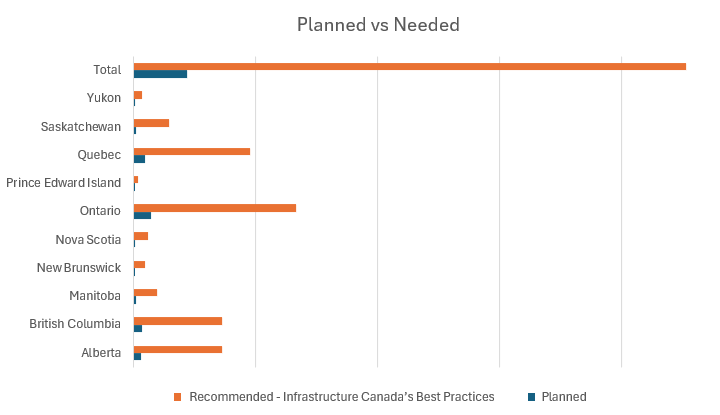
But this isn’t just a “budget balancing” issue — this is about the very foundation of how our country functions. Infrastructure isn’t just some abstract thing; it’s the roads we drive on, the bridges we cross, the water pipes that bring clean water to our homes, and the electrical grids that keep the lights on. Ignoring it doesn’t make the problem go away — it makes it worse, and the costlier the delay, the bigger the bill when we eventually have to pay up.
Waiting for a Crisis?
Let’s get real for a second. It often feels like Canada is waiting for a major catastrophe before anything is done about infrastructure. What’s it going to take? A bridge collapse during rush hour? A water treatment plant failure? How about a power grid outage in the dead of winter? Every year we kick the can down the road, the risk of such disasters grows, and by then it’s too late to “budget” our way out of it.
In 2019, the Canadian Infrastructure Report Card already warned us that 40% of municipal roads and 30% of bridges were in poor or very poor condition. Fast forward to 2024, and it’s safe to say things haven’t gotten any better. The reality is, we’re spending less than a tenth of what we should be just to maintain what we have. It’s not even about building new things; it’s about making sure our existing assets don’t crumble into dust.
Every Year That Passes, the Hole Gets Deeper
It’s like trying to patch a leaky roof but only buying enough shingles to cover 10% of the problem. The rest of the roof keeps getting worse. Before you know it, instead of needing a patch, you need a full-blown roof replacement. And that’s where Canada is headed with its infrastructure. Each year, deferred maintenance means the backlog of repairs grows exponentially. That’s how you end up with what I like to call the “Balloon Year.”
What’s a Balloon Year? It’s the year we finally realize, “Oh wait, all our bridges are about to collapse, and our water systems are falling apart.” So instead of incremental, manageable repairs, we’ll need to dump hundreds of billions of dollars all at once to stop everything from falling apart. And you know who’s going to foot that bill? You, me, and every taxpayer in this country.
Learning from Other Countries
While Canada seems to be waiting for disaster to strike, other countries are proactively maintaining and upgrading their infrastructure, following models that ensure long-term sustainability and avoid balloon payments.
Germany: With its meticulous planning and infrastructure-focused policies, Germany spends about 3-4% of infrastructure value on maintenance annually. The German government follows a life-cycle costing approach, which ensures infrastructure like the Autobahn network is regularly updated and maintained. Their rail systems, in particular, benefit from constant modernization
Norway: Norway is a leader in sustainable infrastructure investment. Their National Transport Plan allocates 3-5% of GDP annually to infrastructure maintenance and upgrades. This continuous investment has enabled Norway to maintain its impressive highway and public transit systems, ensuring long-term functionality. Norway’s success is built on consistent public and private sector cooperation
Singapore: Singapore’s Smart Nation initiative integrates technology into asset management. With a steady investment of 2-4% of asset value in maintenance, Singapore has become a world leader in urban planning and infrastructure management. The city’s public housing and transport systems are not only well-maintained but are constantly being upgraded to meet future demands
Switzerland: Switzerland’s Federal Transport Infrastructure Plan recommends 3-5% of infrastructure value for maintenance annually. Their Service Level Agreement (SLA) model ensures that public agencies maintain high standards of performance for roads, rail, and other public infrastructure. Switzerland’s rail network, among the best in the world, is a testament to this proactive investment
The Trillion-Dollar Wakeup Call
Here’s the cold, hard truth: With each year that passes, the shortfall in infrastructure investment gets worse. We’re not just talking about a minor problem here and there — this is turning into a trillion-dollar wakeup call waiting to happen. Without an accurate understanding of the current condition of Canada’s infrastructure assets, we’re flying blind.
We don’t even know how bad it is because the comprehensive assessments and upgrades aren’t happening at the pace they need to. What happens when all of these issues hit at once? Well, that’s when the “Balloon Year” really pops, and Canada could be faced with an unimaginable financial burden to repair and rebuild crumbling infrastructure.
The Cost of Inaction
The cost of inaction is not just higher taxes or budget deficits in the future. It’s more potholes, more traffic delays, more boil water advisories, and — let’s be honest — more tragedies waiting to happen. Instead of just keeping the existing infrastructure in good repair, we’re letting it rot. It’s like having a car that needs an oil change, but you keep driving until the engine seizes. It’s not just irresponsible, it’s dangerous.
Something Needs to be Done, and Fast
We need to act now. It’s time to stop pretending that infrastructure spending is a “nice to have” and realize that it’s essential. This isn’t just about spending more; it’s about spending smart. It’s about taking a long, hard look at the state of our bridges, roads, power plants, and public utilities and committing to regular, sustained investments that keep them functional and safe.
If we don’t, the balloon is going to pop, and when it does, it won’t be pretty. Canada needs to shift from reactive, disaster-driven spending to proactive, future-focused investment. Because if we don’t start paying attention now, it’ll be too late when disaster strikes, and then we’ll be asking ourselves, “Why didn’t we see this coming?”
Well, we did. And now it’s time to do something about it.

 marksdeepthoughts.ca
Leave a comment