
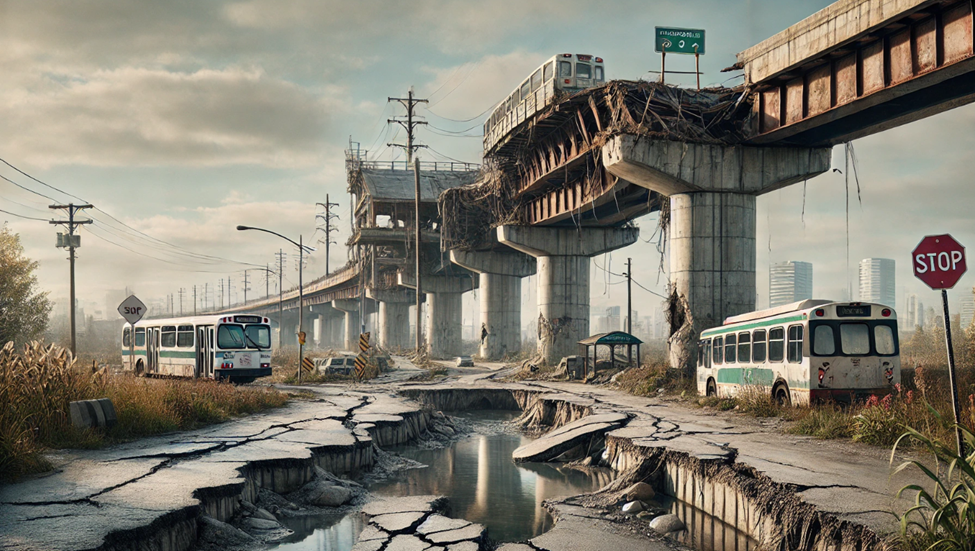
Canada’s infrastructure is the backbone of our economy, connecting communities, supporting public services, and fostering growth. However, recent assessments and financial trends reveal a grim reality: our infrastructure is deteriorating at an alarming rate, and the investments necessary to maintain and repair these critical assets are dwindling.
A Concerning State of Affairs
According to the 2019 Canadian Infrastructure Report Card, as much as 25% of Canada’s infrastructure is in poor to very poor condition. This means that essential assets—such as roads, bridges, public transit systems, and water facilities—are at or near the end of their service life. The implications are severe: deteriorating infrastructure not only hampers economic efficiency but also poses significant risks to public safety and quality of life.
For example:
- Roads and Bridges: Approximately 11% of roads and bridges are in poor or very poor condition. This includes nearly 146,255 kilometres of roads and 9,661 bridges that are crumbling under the weight of time and neglect.
- Public Transit: Over 15% of Canada’s transit tracks require urgent investment to prevent further degradation. This includes crucial urban transit systems that millions of Canadians rely on daily.
- Water Infrastructure: Around 25% of potable water infrastructure, including water treatment facilities and pipelines, is in fair to very poor condition. This threatens not only the delivery of clean water but also public health.
The Decline in Infrastructure Investment
Despite the evident need for substantial investment in infrastructure maintenance, the data shows a worrying decline in funding since 2019. As illustrated by the accompanying chart, infrastructure investments peaked around 2016-2017 but have since plummeted. This decline coincides with an increase in the value of infrastructure assets, indicating that while our infrastructure is aging and requiring more attention, the funds to support its upkeep are shrinking.
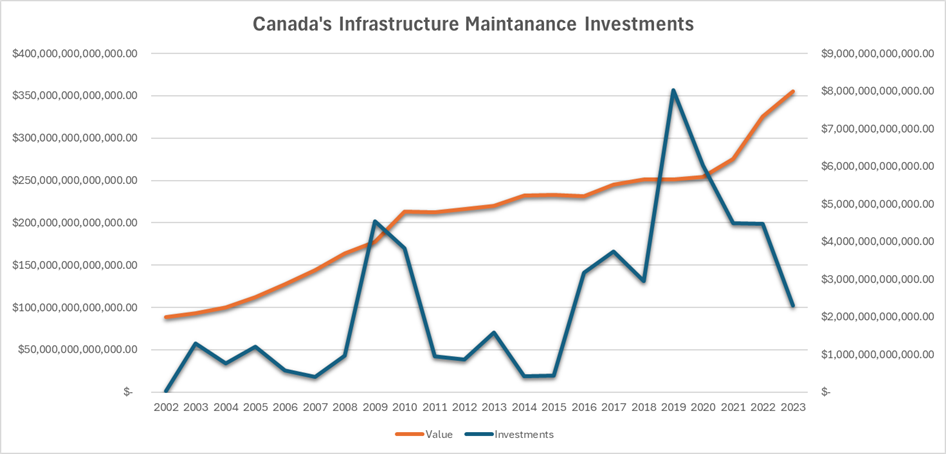
One could argue that this downward trend in investment is a result of government funds being diverted to other projects deemed more politically advantageous. In a time when infrastructure should be a top priority—especially given the increasing impacts of climate change and population growth—Canada’s financial commitment appears to be waning.
The Political and Economic Ramifications
The consequences of underinvestment in infrastructure are far-reaching. Deteriorating assets lead to higher long-term costs, as the expense of emergency repairs or replacements far exceeds the cost of regular maintenance. Moreover, poor infrastructure directly affects the economy by slowing down the movement of goods and people, reducing productivity, and undermining public confidence in government priorities.
There is also a significant political dimension to this issue. While infrastructure investments are often less visible to the public compared to other spending, their impact is felt in every aspect of daily life. The redirection of funds away from infrastructure not only neglects a critical area of public need but also represents a short-term political gain at the expense of long-term national well-being.
A Call to Action
It is imperative that the federal and provincial governments recognize the urgency of Canada’s infrastructure crisis. We must prioritize investments in maintaining and upgrading our essential public assets to ensure they are safe, reliable, and capable of supporting a growing economy.
Canada’s future hinges on the choices we make right now. Investing in infrastructure isn’t just about patching up the cracks; it’s about laying the foundation for a resilient and thriving nation that future generations can actually live in. The clock is ticking, folks—if we don’t act now, the cost of our complacency will be astronomical.
The 2019 Canadian Infrastructure Report Card isn’t just a report: it’s a wake-up call. A quarter of our infrastructure is hanging on by a thread, and instead of pumping in the cash to fix it, we’ve been watching investment nosedive. This isn’t just a problem—it’s a crisis in the making. Canada must urgently re-prioritize infrastructure spending, not just to preserve what we have, but to improve it. Because if we keep kicking this can down the road, the economic, social, and political fallout will make today’s problems look like a picnic.
And here’s the kicker—while our infrastructure crumbles, billions of our tax dollars have been sent offshore. Now, don’t get me wrong, lending a helping hand across borders is a noble thing to do, but let’s get real: when your economy is in the crapper and your house is literally falling apart, maybe, just maybe, you’re not in the best position to be the world’s ATM. We need to take care of our own backyard first, or there won’t be much of a house left to live in. The data doesn’t lie, and neither does the story it tells. The chart shows it all—a steep decline in infrastructure investment since 2019. If we don’t shift focus back to infrastructure now, we’re not just risking the future; we’re sabotaging it. The time for action was yesterday, but today is the next best thing. Let’s get moving.
References: http://canadianinfrastructure.ca/downloads/canadian-infrastructure-report-card-2019.pdf
 marksdeepthoughts.ca
Leave a comment