

In 2021, the City of Toronto conducted a comprehensive study on the state of its core infrastructure, which serves as the foundation for my analysis. The findings of this report revealed some startling realities about the condition and sustainability of Toronto’s essential assets. As we delve into the details of the study, it becomes evident that the city’s infrastructure, valued at an estimated $101.5 billion, is facing significant challenges.
One of the most shocking revelations is the growing backlog of repairs needed for arterial, collector, and local roads. The report highlights that this backlog not only increases the city’s liability but also accelerates the premature deterioration of these vital assets, leading to exponentially higher repair costs over time. Additionally, the study underscores the critical state of Toronto’s bridges and culverts, with many structures nearing the end of their anticipated design life of 75 years.
The study also sheds light on the financial implications of maintaining and upgrading Toronto’s infrastructure. The 10-year forecasted capital costs required to maintain current service levels for roads and bridges alone amount to $8.6 billion, with a significant portion of these costs remaining unfunded. This financial gap poses a substantial risk to the city’s ability to sustain reliable service delivery and meet the growing demands of its population.
Furthermore, the study emphasizes the importance of strategic investment and integrated asset management practices to optimize infrastructure decisions and ensure long-term sustainability. As Toronto continues to grow, the need for new infrastructure to support increased demand becomes increasingly urgent. Development charges, traditionally used to fund such projects, are proving insufficient to cover the projected $1.5 billion required over the next decade.
In this article, I will explore these findings in detail, examining the implications for Toronto’s future and the strategies necessary to address these pressing challenges. The study’s insights provide a crucial framework for understanding the current state of our infrastructure and the steps needed to secure its sustainability for generations to come.
In the heart of Toronto, a city known for its bustling streets and towering skyscrapers, lies a stark and harrowing reality. Our infrastructure is aging, deteriorating, and in desperate need of attention. Roads, bridges, and culverts that were once symbols of progress now stand as potential hazards, waiting for the inevitable tragedy. Must we wait for someone to die before we act? This paper delves into the urgent need for proactive infrastructure management, drawing on the lessons from other cities that paid a high price for their neglect.
The Paradox of Infrastructure Maintenance
When it comes to infrastructure, politicians often shy away from addressing it because it lacks the glamour of other endeavours. Unlike the visible and celebrated ribbon-cutting ceremonies for new parks or community centers, fixing sewers and maintaining roads are thankless tasks that rarely capture the public’s imagination. These essential but unappealing projects typically remain out of sight and out of mind until a crisis forces them into the spotlight.
This reluctance isn’t unique to politicians; it’s a mindset we all share. Consider the shingles on our roofs. Most of us don’t budget for their replacement and only take action when the roof starts leaking. Suddenly, fixing the roof becomes an urgent priority, and the person who arranges the repairs is hailed as a hero. But if that same person had set aside money for roof repairs instead of a fun vacation, they would likely be met with disappointment rather than praise. This is the paradox we find ourselves in, that is proactive maintenance is unappreciated until it becomes reactive crisis management.
It seems that something catastrophic must occur before infrastructure issues are addressed, at which point those who respond are often celebrated for their efforts. This reactive approach underscores a broader societal tendency to ignore maintenance needs until they become unavoidable, even though proactive planning and investment would ultimately be more beneficial and cost-effective.
In this article, we delve into the findings of Toronto’s 2021 infrastructure study to highlight the urgent need for a shift in perspective. We must recognize the importance of maintaining our infrastructure before it fails, even if it means making less glamorous decisions today for the sake of a more secure tomorrow.
Toronto’s Infrastructure Crisis
Toronto’s core infrastructure is facing a critical juncture. The city’s roads, bridges, and culverts, valued collectively at nearly $28 billion, are showing significant signs of wear and tear. According to the 2021 Core Infrastructure Asset Management Report, 25% of major and minor arterial roads are in poor condition, with another 48.8% classified as fair. Local and collector roads fare no better, with 23.5% in poor condition. This situation is mirrored in the city’s bridges and culverts, where significant portions are in fair to poor condition.
The implications of this neglect are dire. Aging infrastructure not only hinders daily commutes and economic activities but also poses severe safety risks. Yet, despite these clear indicators, the city’s response remains sluggish and underfunded. Toronto is sitting on a ticking time bomb, with $4.7 billion in unfunded capital needs for roads and bridges alone over the next decade.
Learning from Catastrophes: Global Examples
History is replete with tragic examples of cities that failed to heed the warnings of deteriorating infrastructure. These examples serve as stark reminders of the catastrophic consequences of inaction.
Genoa, Italy: The Morandi Bridge Collapse
On August 14, 2018, the Morandi Bridge in Genoa, Italy, collapsed, killing 43 people. This tragedy was a direct result of prolonged neglect and insufficient maintenance of the bridge, despite repeated warnings about its structural weaknesses. The collapse not only led to loss of life but also caused severe disruptions in transportation and economic activities, highlighting the cost of deferred maintenance .
Flint, Michigan: The Water Crisis
In Flint, Michigan, a cost-saving measure to switch the city’s water source in 2014 led to widespread lead contamination. The city’s aging water infrastructure was unable to properly treat the new water source, resulting in lead leaching from pipes into the drinking water. The public health crisis that ensued caused irreversible damage to the health of residents, particularly children, and exposed the failures in the city’s infrastructure management.
Minneapolis, USA: The I-35W Bridge Collapse
On August 1, 2007, the I-35W Mississippi River Bridge in Minneapolis collapsed during rush hour, killing 13 people and injuring 145. An investigation revealed that the bridge’s gusset plates, which connected the steel beams, were undersized and had been neglected over the years. This tragedy underscored the critical importance of regular inspections and maintenance of infrastructure to ensure public safety.
Walkerton, Ontario: E. Coli Outbreak
Closer to home, Walkerton, Ontario, experienced a devastating E. Coli outbreak in 2000 due to contaminated water. The town’s water system, compromised by outdated infrastructure and improper management, led to seven deaths and thousands of illnesses. This disaster emphasized the need for rigorous oversight and investment in water infrastructure to protect public health.
The Cost of Waiting
The common thread in these disasters is clear: delayed action on infrastructure maintenance and upgrades can have catastrophic consequences. Toronto, with its aging infrastructure, is not immune to such risks. The signs are evident, and the warnings are clear. Yet, the response has been inadequate, driven by budget constraints and competing priorities.
The true cost of waiting goes beyond financial burdens. It encompasses the loss of lives, the disruption of communities, and the long-term economic impacts that can cripple a city. The question we must ask ourselves is: how many lives are we willing to risk before we take decisive action?

Proactive Measures: A Call to Action
Toronto must adopt a proactive approach to infrastructure management. This includes:
Comprehensive Inspections: Regular and thorough inspections of all infrastructure assets to identify and address issues before they escalate.
Prioritized Investments: Allocating sufficient funds to high-risk areas such as major and minor arterials, expressways, and bridges.
Modernization Projects: Investing in modernization projects to replace outdated infrastructure with resilient and sustainable alternatives.
Public Awareness: Engaging the public and stakeholders in understanding the importance of infrastructure maintenance and the potential risks of inaction.
The phrase “someone needs to die first” should never be the catalyst for change. Toronto stands at a crossroads, with the opportunity to learn from the mistakes of others and to take bold, proactive steps to secure its infrastructure. The time for action is now before the city’s aging roads, bridges, and culverts become the stage for the next preventable tragedy. Let us not wait for a disaster to remind us of the value of life and the importance of safety.
It is time for Toronto to prioritize its infrastructure, ensuring that its streets remain safe and its bridges remain standing. The cost of inaction is simply too high.
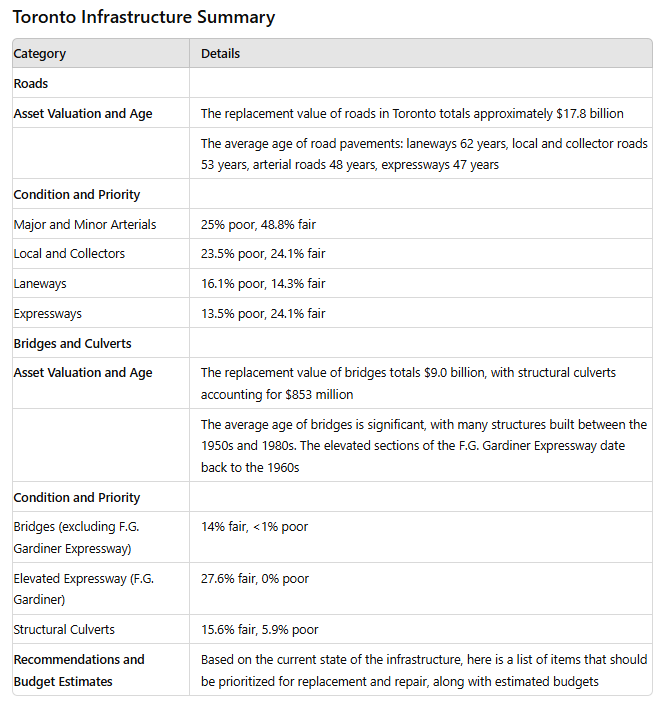

To maintain and improve Toronto’s infrastructure, significant investment is required to address overdue repairs and replacements. The total estimated budget for these critical infrastructure items is approximately $27 billion. Prioritizing high-risk areas such as major and minor arterials, expressways, and elevated sections will ensure safety and sustainability for the public(backgroundfile-171927).
Now the reality of what more than likely will happen when it comes to this large expenditure.
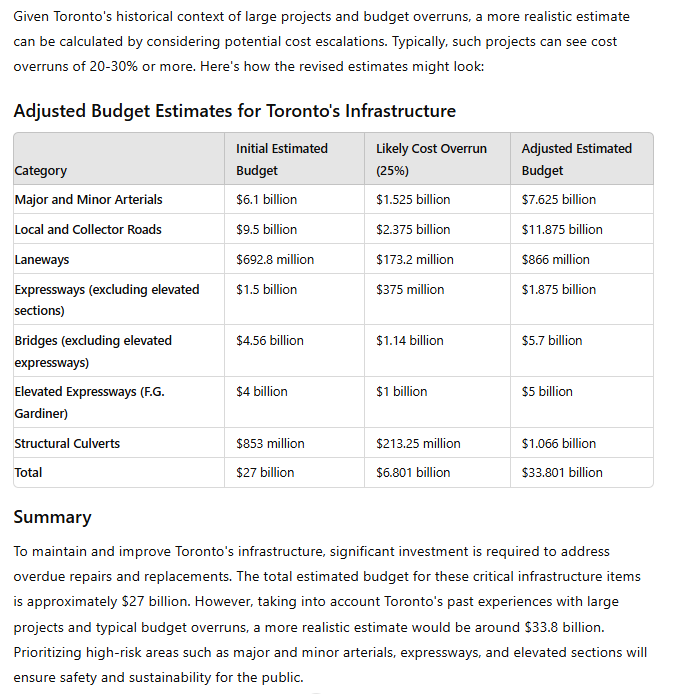
Even with these more realistic predictions, I could see these costs rising to over 40 billion based on my experience and what I have seen when the government deals with massive projects like this.
References:
Core Infrastructure Asset Management Report, City of Toronto, 2021
Morandi Bridge Collapse, Genoa, Italy, 2018
Flint Water Crisis, Flint, Michigan, 2014
I-35W Bridge Collapse, Minneapolis, USA, 2007
E. Coli Outbreak, Walkerton, Ontario, 2000
 marksdeepthoughts.ca
Leave a comment