
In recent times, there has been a growing tendency among environmental activists and some policymakers to attribute the upsurge in devastating forest fires solely to climate change. The Canadian Prime Minister, among others, has adopted this stance, viewing forest fires through the lens of global warming alone. While climate change undeniably plays a role in increasing the frequency and intensity of forest fires, it is not the sole protagonist of this environmental drama. The full picture is far more intricate and calls for a broader understanding of the interplay between climate change, human activities, and forest management practices.
To begin with, it’s important to stress that climate change is a serious global problem requiring immediate and concerted action. Rising temperatures and changing precipitation patterns, both linked to climate change, can create conditions more conducive to wildfires. Lengthened dry spells can make forests more combustible, and warmer conditions can lead to more frequent lightning strikes, a natural ignition source for many wildfires.
However, attributing the rise in forest fires purely to climate change oversimplifies the issue. It’s akin to seeing the trees but not the forest, missing out on the broader ecosystem dynamics and human-induced factors. It is not climate change that sparks these fires, but human activities and occasional natural events like lightning.
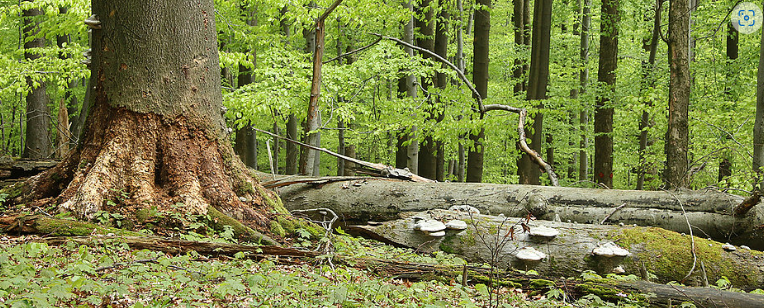
More importantly, the intensity and spread of these fires are significantly influenced by forest management practices. Overgrown and dense forests with excess deadwood and undergrowth provide ideal conditions for fires to spread rapidly and intensely. Proactive forest management, including regular controlled or “prescribed” burns, helps to mitigate this risk by reducing the buildup of these flammable materials.
Despite this, there seems to be a reluctance or inability to engage in such practices on a sufficient scale. Green ideologies and chronic government underfunding have resulted in an imbalance in forest management approaches. This shortfall has led to a situation where forests have become, in Miranda Devine’s words, “overgrown tinderboxes,” ill-prepared to handle wildfires when they arise.
The current narrative, which points to climate change as the primary cause of these fires, can inadvertently shift the focus away from other critical factors like forest management. This misdirected focus could potentially lead to policies and actions that do not fully address the issue at hand. While mitigating climate change is absolutely vital, it should not be at the expense of ignoring proactive forest management strategies.
The need of the hour is to embrace a holistic approach to the issue. Climate change and forest management are not mutually exclusive but interconnected aspects of the same ecological continuum. Just as we are working to reduce our carbon emissions, we should also improve our forest management practices. Our focus should be on creating sustainable, resilient forest ecosystems capable of withstanding the challenges posed by both climate change and wildfires.
Jim Steele, an ecologist who served as director of San Francisco State University’s Sierra Nevada field campus, warned against those attributing the fires to climate change.
“I do not feel the media is educating us about the science that affects fires,” he said. They’re just trying to push a catastrophe narrative that’s been going on way too long.”
“Canada’s forests have not been in a natural state for a long time. Fire suppression has led to forests full of deadfall, which is basically kindling,” The Globe and Mail editorial board warned in July 2021. “Widespread wildfires have become too common, as a result of decades of decisions around fire suppression, logging and replanting, made worse by the punch of climate heating. Forest fires cannot be prevented. But tools are available to mitigate and contain the damage.”
As far back as 2016, Mark Heathcott, who coordinated controlled burns for Parks Canada for 23 years, warned, “A lot of lip service is paid to it but very few agencies do it. People don’t understand the benefit of fire.”
Heathcott supervised controlled burns at Banff National Park, where his team would take months to assess a site. They would consult the local town, wait for prime moisture and wind conditions, then light a match or fuse or coordinate with a pilot for ignition capsules to be dropped, making the perimeter of an area burn inward. “These things aren’t slapdash plans,” Heathcott said. “Nobody ever wants to relinquish control of fire and have it burning willy-nilly on the landscape.”
The discourse surrounding forest fires needs to evolve beyond one-dimensional arguments and finger-pointing. Forest fires are not simply a climate change problem or a forest management problem – they are an environmental challenge that requires a comprehensive and balanced approach. This means acknowledging the multi-layered causes and working towards integrated solutions protecting our forests, communities, and planet. In doing so, we may find that our efforts to mitigate climate change and manage our forests effectively can complement and reinforce each other, leading us towards a more sustainable future.
 marksdeepthoughts.ca
Leave a comment