
Forward:
Welcome to “Unraveling Speech Styles through Linguistic Analysis: Insights from Academic Perspectives.” This document offers valuable insights into the importance of linguistic analysis in understanding speech styles and communication approaches. By examining linguistic features such as verb frequency, noun usage, and delivery patterns of adverbs and adjectives, researchers can gain a deeper understanding of how individuals strategically employ language to communicate, persuade, and engage audiences.
This write up emphasizes the significance of an interdisciplinary approach that integrates linguistic analysis with sentiment analysis. The integrated approach enhances our ability to interpret and appreciate the richness and complexity of speech styles, paving the way for further research and deeper insights into the fascinating world of language and communication.
The theories presented in this paper have the potential to contribute to various fields such as linguistics, rhetoric, psychology, marketing, and communication studies. We hope that this document will inspire researchers to explore new avenues in analyzing language and communication styles. We invite you to delve into this informative document and discover the intricacies of speech styles through linguistic analysis.
Abstract:
Linguistic analysis, an invaluable tool in our quest to unravel the intricacies of speech styles, goes beyond traditional sentiment analysis. While sentiment analysis has long been a prevalent approach to understanding language, this article expands the analytical scope by delving into linguistic features such as verb frequency, noun usage, and the delivery patterns of adverbs and adjectives. By scrutinizing these features, researchers can gain profound insights into individuals’ speaking patterns and speech styles, offering a comprehensive understanding of their communication approach.
Broadening the Analytical Perspective
Traditionally, sentiment analysis has focused on assessing the emotional tone of text or speech, categorizing it as positive, negative, or neutral. Undeniably, sentiment analysis provides valuable information about the emotional impact of a message. However, by incorporating linguistic analysis, we broaden our analytical perspective. By examining verb frequency, researchers can discern whether a speaker employs a high volume of action-oriented language or adopts a more measured approach, indicating their propensity for emphasizing key actions or impactful moments.
Unveiling the Power of Noun Usage
Noun usage stands as another essential aspect of linguistic analysis, shedding light on how speakers convey their ideas and concepts. The examination of noun choices enables researchers to discern whether speakers employ concrete nouns, providing specific details and vivid imagery, or abstract nouns, indicating a preference for broader themes and generalizations. This analysis allows for a deeper understanding of the speaker’s inclination towards tangible examples versus more conceptual language.
The Intricacies of Adverbs and Adjectives
The analysis of adverbs and adjectives further enriches linguistic analysis by elucidating the delivery patterns employed by speakers. By scrutinizing the cadence and distribution of these elements, researchers can uncover the strategies employed to create impact and evoke emotions. A nonlinear delivery, characterized by intensifying or stair-stepping patterns of adverbs and adjectives, adds depth and engages the audience. Conversely, a more linear delivery may provide a straightforward and direct conveyance of information.
An Academic Perspective on Linguistic Analysis
Approaching linguistic analysis from an academic perspective emphasizes the significance of this approach in shedding light on distinct speech patterns and styles. By exploring the relationship between verb frequency, noun usage, and the delivery patterns of adverbs and adjectives, researchers develop a comprehensive understanding of how individuals employ language to communicate their ideas, capture the audience’s attention, and evoke emotional responses.
Expanding the Academic Discourse
By expanding the analytical repertoire to include linguistic features, this article contributes to the academic discourse surrounding speech analysis. It highlights the multifaceted nature of communication and emphasizes the importance of considering linguistic patterns alongside sentiment analysis. Ultimately, this integrated approach enhances our ability to interpret and appreciate the richness and complexity of speech styles, paving the way for further research and deeper insights into the fascinating world of language and communication.
Implications and Future Research
The application of linguistic analysis in studying speech styles holds immense potential across various domains. Understanding linguistic choices, delivery patterns, and strategic emphasis within speeches can have implications for public speaking, political communication, marketing, and even interpersonal communication. Future research can explore the influence of linguistic styles on audience perception, the role of cultural factors in speech patterns, and the impact of linguistic strategies on persuasion and message effectiveness.
Methodology of Linguistic Analysis: Proximity, Volume, and Cadence of Linguistic Elements in Speech Patterns
In the space of linguistic analysis, examining the proximity, volume, and cadence of various linguistic elements within a speech provides valuable insights into speech patterns and styles. This method involves systematically counting and analyzing nouns, verbs, adverbs, and adjectives, along with their syntactic arrangements, to uncover meaningful patterns and shed light on speech characteristics such as subjectivity or verbosity.
Within the field of linguistic analysis, the proximity, volume, and cadence of linguistic elements hold significant importance. These elements provide valuable insights into speech patterns and styles, enabling researchers to unravel the complexities of communication. To facilitate this process, a desktop-scale sentiment analysis framework has been developed—an accomplishment that reflects countless weeks, months, and years of dedication to creating an effective and comprehensive system optimized for standard computing environments. Distinguished by its precision, breadth of functionality, and efficiency, this sentiment analysis model surpasses conventional standards, demonstrating a remarkable capacity for exhaustive sentiment and linguistic evaluations.
A Journey into Linguistic Patterns and Styles
The power of linguistic analysis lies in its ability to unlock the secrets of speech styles and patterns. By examining the nuanced interplay between verb frequency, noun usage, and the delivery patterns of adverbs and adjectives, researchers can gain deeper insights into the strategic employment of language for communication, persuasion, and audience engagement. This analytical approach transcends the limitations of traditional sentiment analysis, expanding our understanding of the multifaceted nature of language and its profound impact on human interaction.
Bridging Academic Disciplines: Linguistics, Rhetoric, and Communication Studies
Linguistic analysis plays a crucial role in various academic disciplines, including linguistics, rhetoric, and communication studies. Through the meticulous examination of patterns, linguistic features, and delivery techniques, researchers develop theories and insights that contribute to our understanding of how individuals strategically employ language to convey their ideas effectively. This interdisciplinary exploration broadens our perspectives on the intricate interplay between language, persuasion, and audience response, enriching the academic discourse surrounding communication.
Unleashing the Potential: Implications and Future Research
The application of linguistic analysis in studying speech styles holds immense potential across numerous domains. Understanding the influence of linguistic choices, delivery patterns, and strategic emphasis within speeches can have far-reaching implications. In the realm of public speaking, linguistic analysis can enhance speakers’ ability to engage and captivate audiences. In political communication, it can shed light on the language strategies employed to shape public opinion. In marketing, linguistic analysis can offer insights into effective messaging and brand positioning. Moreover, exploring interpersonal communication through linguistic analysis can deepen our understanding of how language shapes relationships and social dynamics.
Future research in this field is poised to uncover further insights. Investigations into the impact of linguistic styles on audience perception can unravel the cognitive processes underlying language comprehension and interpretation. Examining the role of cultural factors in speech patterns can unveil the interplay between language and cultural identity. Additionally, exploring the effectiveness of linguistic strategies in persuasion and message delivery can inform communication strategies in various contexts.
The system that I designed and implemented integrates a range of highly accurate sentiment lexicons ranging from AFINN-en-165 to Stanford’s lexicons, together with substantial corpora, including the notable ‘big.txt’. This resource compilation serves as a robust underpinning for advanced sentiment analysis. Over the years, Davenport has single-handedly crafted proprietary algorithms to effectively harmonize these diverse elements, resulting in a sentiment analysis model capable of dissecting both polar (positive and negative) and emotional sentiments such as anger, joy, and anticipation. These lexicons were combined with proprietary functions developed in Python to create a highly accurate sentiment-scoring system. This hybrid approach allowed us to score each sentence in the speeches, providing valuable insights into the emotional tone of Trudeau’s public addresses.
Basic sentiment analysis of text documents follows a straightforward process:
- Break each text document down into its component parts (sentences, phrases, tokens and parts of speech)
- Identify each sentiment-bearing phrase and component
- Assign a sentiment score to each phrase and component (-1 to +1)
- Optional: Combine scores for multi-layered sentiment analysis
However, in a novel departure from traditional sentiment analysis, the methods and model I developed also identify text ambiguity and assess levels of subjectivity and objectivity. This capability offers a more encompassing perspective on the analyzed data. Additionally, the model adeptly recognizes syntactic patterns within the text, contributing to a deeper and more granular linguistic understanding.
In the constructed algorithms, affective considerations are incorporated, supplemented by intensifiers and densifiers. As these components were developed, their substantial influence became evident, demonstrated by the resultant fluctuations during unit testing. Moreover, a critical application of fuzzy logic in this context was the development of a sarcasm detection model, which boasted an accuracy of approximately 80%. This segment of the code underwent rigorous testing; discrepancies in expected outcomes were frequently attributed to the influence of sarcasm, reinforcing its role in the context of sentiment scoring.
Furthermore, a comprehensive repository of coarse language has been included, which can substantially influence the sentiment of a given subject. Utilizing three highly reputable lexicons in conjunction with proprietary algorithms, the system yields highly accurate results. My explorations into the domain of linguistic analysis allowed me to exploit the weaknesses of many online services, thereby showcasing the robustness of my system in resisting similar manipulations.
A distinctive attribute of this sentiment analysis framework is its capacity to perform subject-level sentiment analysis. This feature pinpoints and quantifies sentiment related to different subjects within the text, providing sentiment insights that are not only detailed but also contextually aware and theme-specific.
Functionality and Feature
Integration of Sentiment Lexicons and Corpora: Davenport’s system exploits an array of sentiment lexicons, databases containing words pre-labeled according to sentiment polarity. Combined with the ‘big.text’ corpora – a vast collection of text data – these lexicons provide a sturdy foundation for precise and robust sentiment analysis, covering an expansive range of sentiments from varied domains.
Proprietary Algorithms: The proprietary algorithms that drive this model were developed single-handedly by Davenport over several years. These algorithms seamlessly combine lexicons and corpora, enabling the model to dissect an array of sentiments beyond just the traditional positive and negative polarity.
Identifying Text Ambiguity, Subjectivity, and Objectivity: This unique feature distinguishes subjective and objective sentiments and identifies text ambiguity, thus enhancing the depth of analysis. This approach yields a more rounded interpretation of the text, providing a broader perspective of the sentiments expressed.
Polarity in Sentiment: Sentiment polarity refers to the measure of the emotional orientation or sentiment expressed in a piece of text, such as a sentence, paragraph, or document. It indicates whether the expressed sentiment is positive, negative, or neutral.
Keyword Search: The program also has the ability to find and sum specific keywords that can also provide further insight.
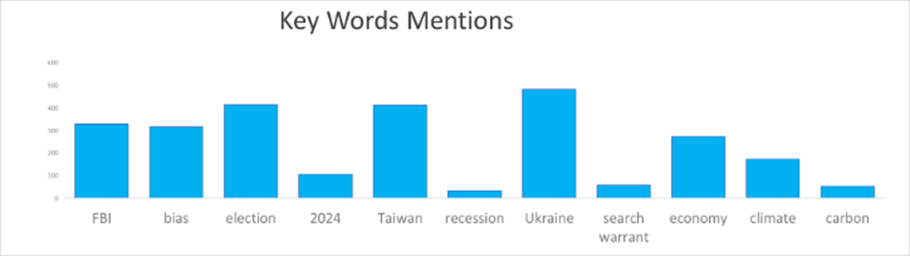
This sentiment analysis framework represents a significant stride forward in the sentiment analysis. It brings accuracy, breadth, and depth to sentiment analysis, remaining operable on standard computing platforms. This sophisticated system, borne from thousands of hours of dedicated work, is poised to be a game-changer across various applications, from in-depth social media trend analysis to sophisticated market research and beyond.
Cadence and Syntax: The cadence and syntax of a speech, which refer to the rhythm, flow, and arrangement of linguistic elements, provide additional insights into speech patterns. By examining the pacing and arrangement of nouns, verbs, adverbs, and adjectives, researchers can discern whether the speech is characterized by a linear or nonlinear delivery. Does the speaker follow a consistent and smooth syntactic structure, or do they utilize a more varied and unpredictable pattern? The cadence of the speech can reveal the speaker’s intentional use of pauses, emphasis, or changes in delivery speed to engage the audience, create suspense, or highlight key points.
Sentiment analysis, also known as opinion mining, is a field of natural language processing (NLP) that aims to automatically identify and extract subjective information from text data. One of the key tasks in sentiment analysis is determining the sentiment polarity of the text.
The sentiment polarity of a piece of text is usually represented on a numeric scale, with three main categories: positive, negative, and neutral. Positive sentiment indicates a favorable or positive opinion or emotion, while negative sentiment indicates an unfavorable or negative opinion or emotion. Neutral sentiment, on the other hand, implies the absence of any strong positive or negative sentiment.
Various techniques and approaches are used in sentiment analysis to determine sentiment polarity. These include rule-based methods, machine learning algorithms, and deep learning models. Rule-based methods rely on predefined patterns or linguistic rules to identify sentiment-bearing words and phrases and assign sentiment labels. Machine learning algorithms and deep learning models, on the other hand, learn from labeled training data to automatically identify patterns and features that are indicative of sentiment polarity.
Sentiment polarity analysis has a wide range of applications in different domains. It can be used to analyze customer reviews, social media posts, and online discussions to understand public opinion about products, services, or events. It can also be employed in brand monitoring, market research, and reputation management. Additionally, sentiment analysis is valuable in political analysis, stock market prediction, and other areas where understanding public sentiment is crucial.
Syntactic Pattern Recognition: This capability allows the model to understand sentence structures and recognize patterns within them. It aids in discerning shifts in tone and writing style that can signal changes in sentiment. Linguistic syntactic analysis is parsing text that involves analyzing the grammatical structure of a sentence or a piece of text based on the rules of a specific language’s syntax. It aims to understand how words in a sentence are structured and how they relate to each other to convey meaning.
The syntactic analysis involves breaking down a sentence into its constituent parts and determining the relationships between those parts. It helps identify the roles of words, phrases, and clauses in a sentence and how they combine to form a coherent structure. This analysis is crucial for understanding the grammatical correctness of a sentence and extracting the underlying syntactic information.
There are various approaches to perform syntactic analysis, ranging from rule-based methods to statistical and machine learning techniques. Rule-based methods rely on pre-defined grammatical rules and linguistic knowledge to analyze sentences and generate parse trees or phrase structures. These rules define the allowable word orders, phrase structures, and syntactic dependencies in a language.
Statistical and machine learning approaches, on the other hand, learn from annotated training data to automatically derive syntactic patterns and structures. These methods use annotated corpora, where sentences are manually parsed and labeled, to train models that can generalize and parse unseen sentences.
Syntactic analysis plays a crucial role in many NLP tasks and applications. It helps improve the accuracy of machine translation systems, text-to-speech synthesis, and information extraction. It is also essential in sentiment analysis, question-answering systems, and grammar-checking tools. By understanding the syntactic structure of a sentence, NLP systems can better comprehend and process natural language, leading to more accurate and meaningful results.
Subject-level Sentiment Analysis: The ability of my model to perform sentiment analysis at the subject level adds a layer of contextual understanding to the analysis. It quantifies sentiment related to specific subjects in the text, providing richer, more relevant insights. Subject-level sentiment analysis involves analyzing sentiment not only at the document or sentence level but also at a more granular level, focusing on specific aspects or subjects within the text. It aims to determine the sentiment expressed towards different subjects or entities mentioned in the text, providing more detailed insights into opinions and emotions.
Benefits:
Fine-grained understanding: By analyzing sentiment at the subject level, we gain a deeper understanding of how different aspects or entities are perceived. This level of granularity allows us to capture nuanced opinions and sentiments that may be missed in a general sentiment analysis of the entire document.
Targeted decision-making: Subject level sentiment analysis enables businesses and organizations to make more targeted decisions. By identifying the sentiment towards specific products, features, or services, companies can focus their efforts on areas that need improvement or capitalize on aspects that receive positive feedback.
Customer feedback analysis: Subject-level sentiment analysis is particularly useful in analyzing customer feedback, reviews, or social media comments. It helps businesses gauge customer satisfaction or dissatisfaction with different aspects of their offerings, such as customer service, pricing, product quality, or specific features.
Brand reputation management: Understanding the sentiment associated with different aspects of a brand can assist in reputation management. By monitoring sentiment towards various brand elements, such as brand image, customer support, or marketing campaigns, organizations can address issues promptly and take proactive steps to improve public perception.
Market research and competitor analysis: Subject-level sentiment analysis allows businesses to gain insights into customer preferences, market trends, and competitor performance. By analyzing sentiment towards specific products, features, or services, organizations can identify gaps in the market or compare sentiment scores against competitors, guiding strategic decision-making.
Personalized user experiences: Subject-level sentiment analysis can be used to personalize user experiences by tailoring recommendations or content based on individual preferences. By understanding the sentiment associated with different topics or interests, companies can provide targeted recommendations, advertising, or product suggestions that align with users’ sentiments.
Overall, subject level sentiment analysis provides a more detailed and comprehensive understanding of sentiment by focusing on specific subjects or entities within the text. This level of analysis offers valuable insights for decision-making, customer feedback analysis, brand management, market research, and personalized user experiences.
The Issue with Current Sentiment Analysis Tools
Current sentiment analysis tools often present various limitations that hinder their accessibility and effectiveness. Firstly, a considerable portion of these tools are offered as paid services, and typically impose limitations on the volume of text or data one can analyze. This constrains their utility, especially for users seeking to perform extensive analyses.
Secondly, the majority of these tools necessitate proficiency in programming languages, placing them out of reach for individuals without coding skills. These platforms rely heavily on technical expertise, creating a barrier to entry for many potential users.
Finally, an inherent problem with these tools is the inconsistency of their results. Different services may produce distinct outcomes for the same data, creating ambiguity and doubt over the validity of the results. This lack of uniformity can undermine confidence in these tools, and cast uncertainty on decision-making based on their analyses.
The Solution: A Versatile, Desktop-scale Sentiment Analysis Framework
My sentiment analysis system offers an innovative solution to these limitations. Designed for operation at a desktop-scale, it ensures extensive sentiment analysis capabilities without the restrictions typically associated with conventional tools.
Firstly, the system is not a paid service and hence does not impose limitations on the quantity of data or text to be analyzed. Whether you need to process a few hundred records or over a million, the system is equipped to handle it, only constrained by memory and processor speed.
Secondly, this framework offers flexibility in terms of its user interface. While it can be used at the programming level, it also allows users to perform analyses in a more straightforward manner. For example, users can simply paste records into an Excel spreadsheet and apply the provided formulas through an Excel add-on. This makes the system accessible to users regardless of their technical proficiency.
Moreover, the system is compatible with various Microsoft Office applications, including Word and Outlook. This interoperability allows users to leverage the system in diverse contexts, enhancing its utility.
Notably, Davenport’s model also boasts features that extend beyond typical sentiment analysis tools. It is capable of detecting litigious language and legal jargon, which is particularly valuable in certain fields such as law and policy.
With a straightforward five-minute installation process, this system can be rapidly deployed, providing users with a comprehensive suite of analytical features that are not commonly found in standard sentiment analysis tools.
In conclusion, Davenport’s sentiment analysis system resolves the accessibility issue prevalent in current tools, offers flexible and expansive analysis capabilities, and equips users with advanced features to extract deeper insights from their data. Its innovation lies in combining powerful analysis with practical usability, opening the door to more nuanced understanding of sentiments within any volume of text.
Online sentiment analysis tools have gained popularity in recent years as businesses and organizations strive to understand public opinion and sentiment. However, these tools often come with their fair share of issues. They can be expensive, require significant user input, lack consistency, and can be easily fooled. In light of these limitations, there is a growing demand for an advanced sentiment analysis system that overcomes these challenges and offers superior capabilities. This article explores the drawbacks of existing tools and highlights the advantages of a comprehensive system that incorporates advanced features and scalability.
One of the primary issues with many online sentiment analysis tools is their high cost. Companies often need to invest significant resources to access these tools, making them inaccessible to smaller businesses or organizations with limited budgets. The expense can hinder widespread adoption, preventing a more comprehensive understanding of sentiment across different domains and markets.
Another challenge is the considerable user input required by many sentiment analysis tools. Users often need to manually label or categorize data, which can be time-consuming and prone to errors. This reliance on human intervention can limit the scalability and efficiency of sentiment analysis, particularly when dealing with large volumes of data.
Consistency is a crucial factor in sentiment analysis, yet many existing tools struggle to provide consistent results. Different tools may produce conflicting sentiment classifications for the same piece of text, leading to confusion and unreliable insights. This inconsistency hampers the ability to make accurate decisions based on sentiment analysis outputs.
Online sentiment analysis tools can be easily fooled, especially when it comes to detecting nuances such as sarcasm or irony. These tools often fail to recognize context or subtle linguistic cues, resulting in inaccurate sentiment analysis. As a consequence, the insights derived from these tools may not accurately reflect true public sentiment, leading to misguided actions or decisions.
To address these limitations, an advanced sentiment analysis system like mine is needed—one that combines the best features of existing methods while incorporating advanced capabilities to detect complexities like sarcasm. Such a system should be simple to use, scalable to handle large volumes of data, and adaptable to different scenarios.
By leveraging cutting-edge techniques from natural language processing and machine learning, an advanced sentiment analysis system can better understand and interpret sentiment within various contexts. It can learn from vast amounts of labeled data to develop robust models capable of detecting sarcasm, irony, and other nuanced expressions accurately. The system’s simplicity ensures user-friendliness, allowing users to obtain reliable sentiment insights without the need for extensive manual intervention.
Moreover, an advanced sentiment analysis system should be highly scalable, and capable of handling millions of records repeatedly. This scalability empowers businesses to analyze sentiment at a larger scale, enabling more comprehensive market research, reputation management, and customer feedback analysis.
Furthermore, the system’s expandability ensures that it can be applied to diverse scenarios and domains. Whether it’s analyzing sentiment in social media conversations, product reviews, or customer feedback surveys, an advanced sentiment analysis system can adapt and provide valuable insights across multiple contexts.
Literature Review: Sentiment analysis, also known as opinion mining, has garnered significant attention in the field of natural language processing (NLP) and computational linguistics. This literature review aims to provide an overview of the existing research on sentiment analysis, focusing on techniques, applications, and challenges encountered in this domain. In the below review of sentiment analysis, you will see that my tool addresses many of the needs while it handles the potential issues with respect to performing sentiment analysis.
Techniques:
1.1 Rule-Based Approaches: Rule-based methods rely on predefined linguistic rules and patterns to identify sentiment-bearing words and phrases. These approaches are often based on sentiment lexicons or dictionaries and utilize linguistic features to determine sentiment polarity.
1.2 Machine Learning Approaches: Machine learning techniques, such as supervised learning, unsupervised learning, and semi-supervised learning, have been widely employed in sentiment analysis. These approaches use labeled training data to train models that can automatically classify sentiment based on extracted features.
1.3 Deep Learning Approaches: Deep learning methods, particularly recurrent neural networks (RNNs) and convolutional neural networks (CNNs), have shown promising results in sentiment analysis. These approaches learn hierarchical representations of text data, capturing contextual information and improving sentiment classification performance.
Applications:
2.1 Social Media Analysis: Sentiment analysis finds extensive application in analyzing sentiments expressed on social media platforms. It aids in understanding public opinion, monitoring brand reputation, and identifying emerging trends or issues.
2.2 Customer Feedback Analysis: Sentiment analysis is instrumental in analyzing customer reviews, feedback surveys, and support tickets. It helps businesses assess customer satisfaction, identify areas for improvement, and make informed decisions for product development or service enhancements.
2.3 Market Research: Sentiment analysis provides valuable insights for market research, enabling businesses to gauge customer preferences, evaluate competitor performance, and identify market trends.
2.4 Political Analysis: Sentiment analysis has been employed in political discourse analysis, election forecasting, and understanding public sentiment towards political figures or policies.
Challenges:
3.1 Subjectivity and Context: Sentiment analysis encounters challenges in handling subjective language, sarcasm, irony, and context-dependent sentiment expressions. Developing robust models that can accurately capture these nuances remains a challenge.
3.2 Data Sparsity and Imbalance: Obtaining labeled training data for sentiment analysis can be challenging, particularly in specialized domains. Data sparsity and class imbalance affect model performance and generalization.
3.3 Multilingual and Cross-Cultural Analysis: Sentiment analysis faces complexities when applied to multilingual and cross-cultural settings. Language variations, cultural nuances, and sentiment lexicon availability pose challenges in achieving accurate sentiment classification.
3.4 Domain Adaptation: Sentiment analysis models trained on one domain often struggle to generalize well to new domains. Adapting sentiment analysis techniques to specific domains with limited labelled data remains challenging.
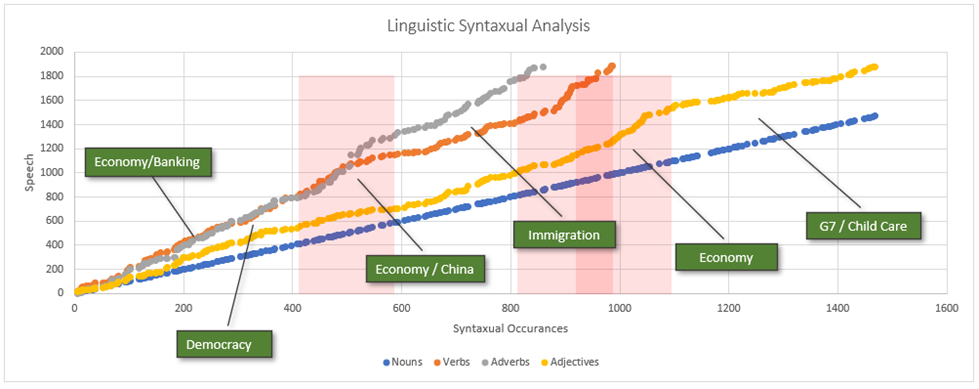
Methodology – Exploring Sentiment Analysis through Speech Dissection: An examination of the word-type frequencies within the analyzed speeches presents a fascinating landscape of linguistic choices and communication styles. A notable discovery is the diminished frequency of nouns as compared to previous speeches. This may signal a strategic shift in the speaker’s rhetoric, with a move away from emphasizing particular objects, ideas, or entities. The reduced noun usage could point to a preference for more abstract or conceptual language, underscoring broad themes or principles rather than tangible examples.
Parallel to this, the frequencies of verbs and adjectives demonstrate a close alignment and display a distinct, non-linear pattern. These oscillations, which vacillate between periods of low and high usage, could correspond to moments of elevated rhetorical intensity where the speaker amplifies actions or enriches descriptions. This dynamism in verb and adjective deployment can serve to invigorate the audience’s attention and provoke potent emotional responses.
Similarly, the frequency of adverbs exhibits a distinctive ‘stair-stepping’ pattern throughout the speeches. This intriguing pattern might indicate a calculated strategy by the speaker to progressively intensify adverb usage in distinct phases. Each phase could correspond to particular segments in the speech where the speaker’s intention is to augment emphasis, precision, or persuasive power. By judiciously inserting adverbs in these increments, the speaker could aim to sustain audience engagement and fortify pivotal points at strategic moments.
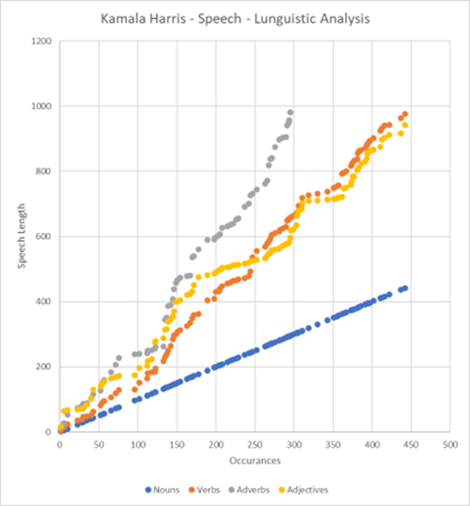
Collectively, the analyzed speeches disclose a rhetorical style that eschews linearity in favor of increased verb, adjective, and adverb usage. This indicates a dynamic and purposeful communication strategy, with an emphasis on influential moments, vivid portrayals, and strategic stress points. The infrequent use of nouns could intimate a rhetorical shift towards more abstract language and a diminished focus on concrete details – a characteristic that critics have often spotlighted.
The fluctuating pattern of verb and adjective usage, coupled with the stair-stepping progression of adverbs, speaks to a deliberate modulation in the delivery style and intensity of the speeches. Such an approach is geared towards captivating the audience, inciting emotional reactions, and directing the audience towards specific actions or decisions.
This communicative approach, characterized by heightened emotional appeal and dramatic delivery rather than presenting unambiguous facts or clear concepts, is often encountered in persuasive or sales-oriented settings. The goal of such a speech is to foster an emotional rapport with the audience, induce a sense of urgency or importance, and ultimately steer their decision-making process.

Results: In this study, a speech from Justin Trudeau was analyzed to show the emotional sentiment, which depending on the context can provide very insightful information.
In another study the tool was used to assess contractual document for clarity and overall quality of statements of work, contract and license agreements. This proved highly valuable it helped to predict the readability of documents. In their work, by using documents that are by nature very clear of their intent, they analyzed thousands of court judgment documents. Through their work, they made some incredible observations on how to predict the readability of a document. From this, I have taken these observations and applied them to a “readability model” to assess the “readability” of Documents, specifically Statements of Work. The purpose of this tool is to provide SOW documents that are clear with well-described objectives preventing multiple vendor clarifications.
The illustration below is sourced from an actual SOW approved and used in procurement. Overall, before the readability analysis, the SOW rated quite good; however, from the lens of a readability assessment, its score became lower for things like lengthy sentences, objectivity, verbosity and overall clarity. In terms of what one would do to improve this SOW, it would be performing simple improvements such as being more descriptive, more subjective, shortening sentences and using simple words.

Although this kind of out there in terms of MS Office tools, performing document analysis in this manner is becoming something that many leading businesses. The objective of this effort is to save time, improve quality, result in a more efficient workflow, and ultimately aid in the entire procurement process.
The purpose of this tool is to provide SOW documents that are clear with well-described objectives preventing multiple vendor clarifications. The illustration below is sourced from an actual SOW approved and used in procurement. Overall, before the readability analysis, the SOW rated quite good; however, from the lens of a readability assessment, its score became lower for things like lengthy sentences, objectivity, verbosity and overall clarity.
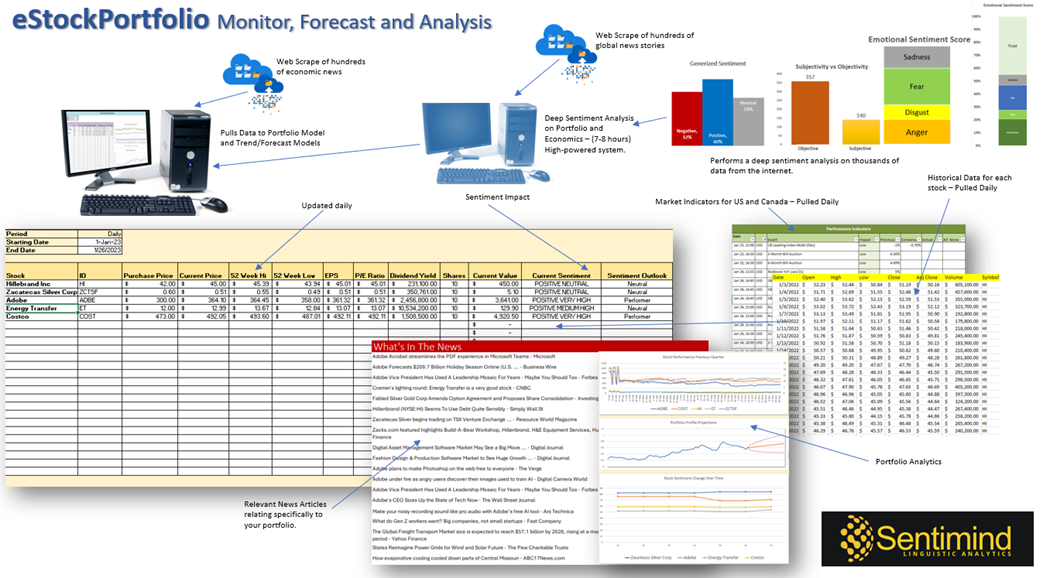
Web Scraping: Using massive amounts of articles from the internet, and the results run through the sentiment analysis model resulting in very interesting. In this example we compared how different news media covered world events.
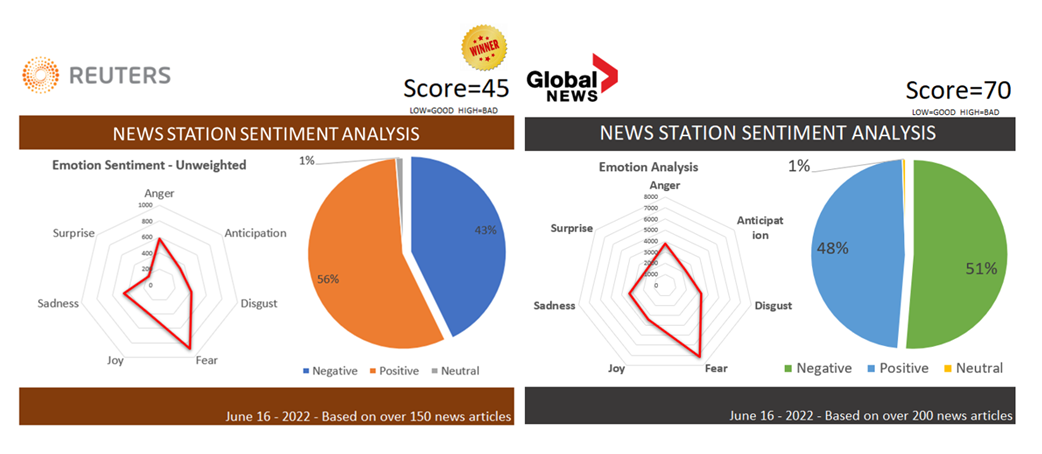
In this study as can see that when it came to the news, the sentiment of fear was forefront to help keep the interest and the people following the narrative.
I also ran speeches through the model, in this example we have speeches from Justin Trudeau, over the course of years to plot the sentiment of fear detected in his speeches and this clearly shows when this became forefront as shown in the report below.

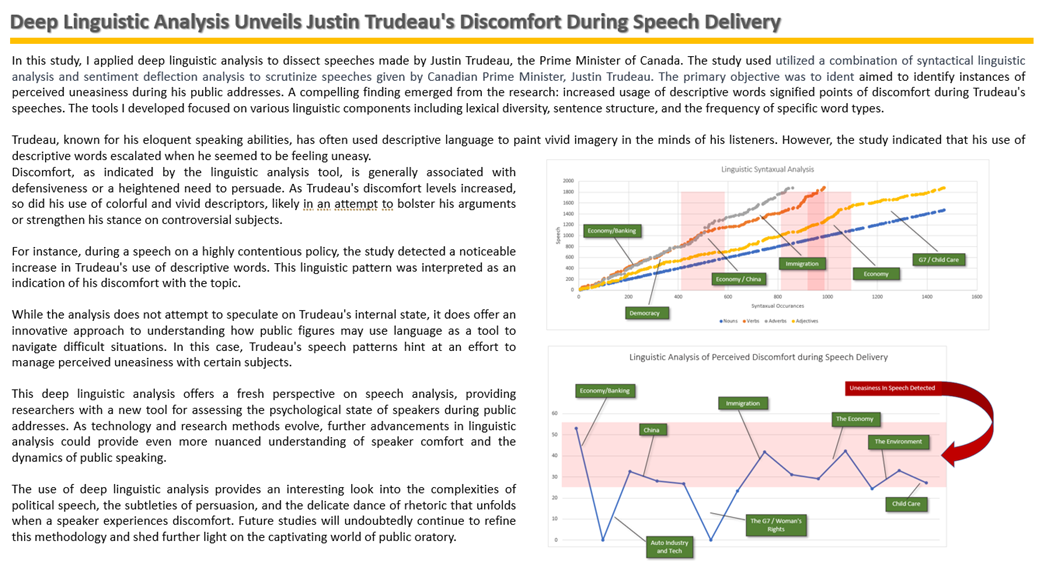
In this study, I applied deep linguistic analysis to dissect speeches made by Justin Trudeau, the Prime Minister of Canada. The study used utilized a combination of syntactical linguistic analysis and sentiment deflection analysis to scrutinize speeches given by Canadian Prime Minister, Justin Trudeau. The primary objective was to ident aimed to identify instances of perceived uneasiness during his public addresses. A compelling finding emerged from the research: increased usage of descriptive words signified points of discomfort during Trudeau’s speeches. The tools
BIAS Detection: In this study, we once again scrapped the internet for literally thousands of articles about two leaders and reported on the sentiment which clearly showed some perceived bias.
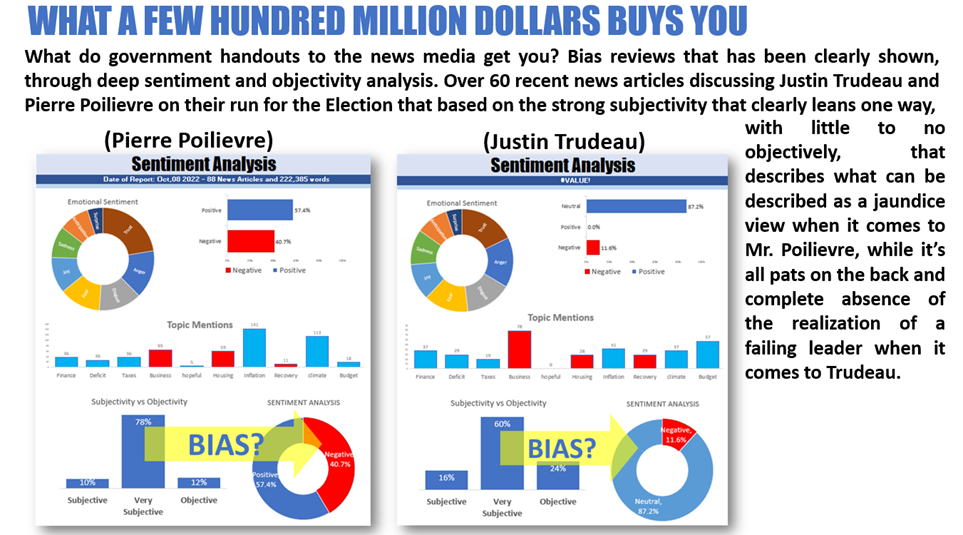

Subjectivity in the media: Many reports and studies were conducted on thousands of news articles and it was surprising to see that the news reports was showing a high indication of subjectivity. Having a powerful sentiment analysis tool at my disposal that analyzes comments associated with a YouTube video is very powerful as it tells you the negative and positive sentiments that people are expressing in the comments they make. As in this example where we have two political opponents, Justine Trudeau and Pierre Poilievre, who lately seem to be at each other and always in a heated debate. Based on my analysis, people have shown very strong opinions on this latest video.

Emotional Sentiment of the news media: Having a powerful sentiment analysis tool at my disposal, I get to analyze news articles retrieved through my web scraper. Yesterday I was able to download and analyze over 3200 international opinion articles regarding the global economy. From news stations and reporters all over the world, the results were sadly as expected. Due to media spin, and many who I sense are innumerate, there are far too many people who believe inflation is transitory, and the rescue plans both Biden and Trudeau remain clinging to will turn it all around. But as some wear thit rose-coloured glasses, all indicators have the economy veering towards a full-blown depression.

Adding fuel to the fire, Canada expects another rise in interest rates in a few months which that will pretty much set things in motion forcing some to sell their homes and downsize, some will default on loans, or be left with a mortgage for more than their home is worth. At the end of the day, our leaders do not have skin in the game, they will continue to convince us all is well, since regardless what happens, they are untouchable. Face it, while most have suffered these last few years, most high-ranking government officials have in some cases double and tripled their financial portfolios. For me, I have already prepared myself in the event it all hits the fan, I would suggest you do the same and ignore those who do not have skin in the game.
Sentiment in Social Media Study:

I recently developed a focus on various linguistic components including lexical diversity, sentence structure, and the frequency of specific word types. Discomfort, as indicated by the linguistic analysis tool, is generally associated with defensiveness or a heightened need to persuade. As Trudeau’s discomfort levels increased, so did his use of colorful and vivid descriptors, likely in an attempt to bolster his arguments or strengthen his stance on controversial subjects.
For instance, during a speech on a highly contentious policy, the study detected a noticeable increase in Trudeau’s use of descriptive words. This linguistic pattern was interpreted as an indication of his discomfort with the topic.
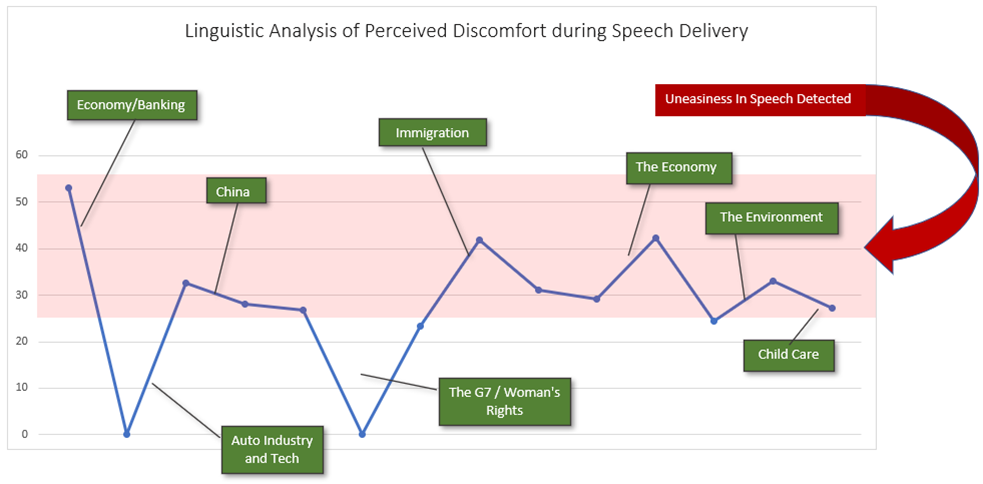
While the analysis does not attempt to speculate on Trudeau’s internal state, it does offer an innovative approach to understanding how public figures may use language as a tool to navigate difficult situations. In this case, Trudeau’s speech patterns hint at an effort to manage perceived uneasiness with certain subjects.
This deep linguistic analysis offers a fresh perspective on speech analysis, providing researchers with a new tool for assessing the psychological state of speakers during public addresses. As technology and research methods evolve, further advancements in linguistic analysis could provide an even more nuanced understanding of speaker comfort and the dynamics of public speaking.
The use of deep linguistic analysis provides an interesting look into the complexities of political speech, the subtleties of persuasion, and the delicate dance of rhetoric that unfolds when a speaker experiences discomfort. Future studies will undoubtedly continue to refine this methodology and shed further light on the captivating world of public oratory.
Public speeches play a crucial role in shaping public opinion, conveying messages, and influencing policy decisions. While the content and delivery style of a speech is essential, an often overlooked aspect is the identification of the subjects discussed. Understanding the subjects highlighted in a speech provides insights into the speaker’s priorities, and focus, and potentially sheds light on issues that truly matter versus those that may lack significance. By analyzing the subjects covered, we can gauge the depth of understanding and the level of commitment toward addressing critical concerns.
The subjects a speaker chooses to address in a speech reflect their priorities. By explicitly highlighting certain topics, the speaker demonstrates a commitment to addressing and resolving those issues. The selection of subjects helps discern whether the speaker is genuinely focused on matters that affect people’s lives or merely skimming the surface of more significant concerns. The more attention given to subjects that matter, the more likely it is that the speaker recognizes and values the needs of the audience. Sometimes, a speaker’s choice of subjects can reveal underlying motives or hidden agendas. By diverting attention from crucial issues, a speaker may attempt to manipulate the narrative, distract from controversies, or avoid accountability. Identifying such omissions or misdirections becomes crucial for discerning the speaker’s true intentions and evaluating the integrity of their speech. Moreover, combining subject identification with sentiment analysis adds another layer of depth to our understanding of a speech, interview, or interrogation. Sentiment analysis is the process of determining the emotional tone underlying a series of words to gain an understanding of the attitudes, opinions, and emotions expressed. It involves assigning values to textual data, typically in terms of positivity, negativity, or neutrality. When applied to subjects identified in a speech, it offers an even more nuanced comprehension of the speaker’s stance. For instance, a speaker may discuss various subjects extensively, but the sentiment towards each can be notably different. Some subjects might be addressed with enthusiasm and optimism, indicating an addressed with enthusiasm and optimism, indicating a positive sentiment and possibly a commitment to work towards these issues. On the contrary, some subjects may be mentioned with criticism or disdain, demonstrating negative sentiment and suggesting a lack of support or even active opposition. Neutrality towards a subject, on the other hand, might suggest indifference or a lack of a solid stance.

In interrogations or interviews, sentiment analysis can be particularly enlightening. The subject being discussed and the sentiment expressed towards it can provide clues about the person’s thoughts, feelings, and possibly even culpability. For example, an individual may express anxiety or stress when discussing a particular subject, suggesting a deeper involvement or concern.
By coupling subject identification with sentiment analysis, we can unveil a speaker’s priorities, emotions, and possibly hidden agendas. It adds context and depth, painting a more complete picture of a speaker’s perspectives and intentions, thus allowing for a more comprehensive understanding and evaluation of their discourse. This dual approach not only improves the analysis of speeches, interviews, and interrogations but also enhances our understanding of the complexities of human communication.
Further Supporting Data
The below report was run against an older speed delivered by Pierre Elliot Trudeau and based on what the model and algorithms show, and actually reading the speech, the the speech does have some characteristics that the data fully supports. In summary the speech outlines several concrete steps for improving these systems, such as reforming the International Monetary Fund and the World Bank, increasing transparency, and better managing financial crises.
In this example, the speech has a high ratio of verbs, adverbs, and adjectives to nouns that often suggest a more persuasive or action-oriented intention, which is typical of political speeches. This phenomenon, sometimes called “verboseness,” can serve several functions:
- Narrative and storytelling: Verbs and adverbs are essential in telling stories and creating a narrative, which can make a speech more engaging and relatable.
- Creating a sense of action and progress: The use of verbs, particularly active verbs, can give the impression of action, movement, or progress. This can be particularly important in political speeches, where speakers often want to emphasize their achievements or future plans.
- Persuasion and emotiveness: Adverbs and adjectives can add emotional weight to a speech and make it more persuasive. They can be used to intensify the meaning of other words, describe situations in a more engaging or impactful way, and evoke specific emotions in the audience.
In this speech, for example, the speaker uses verbs and adverbs to emphasize the actions that have been taken (e.g., “We have just completed a gruelling round of multilateral trade negotiations”), the actions that will be taken (e.g., “we will work with the international community”), and the importance or urgency of these actions (e.g., “we must do”). This verboseness helps to create a sense of action, progress, and commitment, which can be persuasive to the audience.
That said, as with most political speeches, it does contain elements of rhetoric designed to inspire or reassure the audience and set a positive tone. For instance, the speaker emphasizes Canada’s commitment to cooperation, teamwork, and progress, and their role in the international community. Phrases like “our government was elected on a jobs and growth platform”, “we have come a long way”, and “we will succeed” are clear examples of rhetoric intended to reinforce the speaker’s and their government’s credibility and vision.

Subject Sentiment Analysis
If the sentiment by subject matter is more negative than positive for each subject in the speech, it suggests a few possibilities:
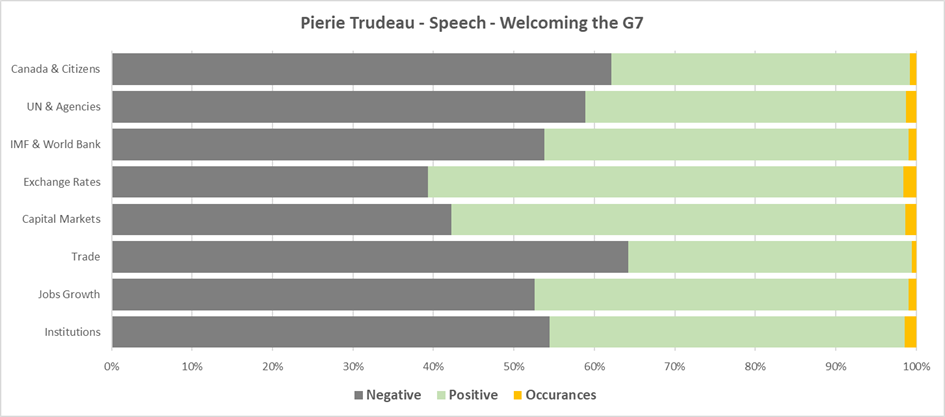
Overall, it seems the speaker has a more critical or concerned view of several major topics. The speech might have been intended to highlight these concerns and rally support for solutions or reforms. However, the more positive sentiment around Capital Markets and Exchange Rates also suggests some areas of optimism and hope. It’s perhaps not a balanced outlook delivery as once you read the speech, it is quite evident it is not a “mom and apple pie” speech as it combines acknowledging the problems with recognizing areas of concern.
Findings
Trudeau, lauded for his eloquent speaking abilities, has often employed descriptive language to paint vivid imagery in the minds of his listeners. However, our analysis indicated that his use of descriptive words escalated when he seemed to be feeling uneasy. This was particularly noticeable during speeches on contentious policies, hinting at an effort to manage perceived uneasiness with certain subjects.
While our study doesn’t speculate on Trudeau’s internal state, it provides an innovative tool for understanding how public figures may navigate difficult conversations. Our study suggests that Trudeau’s discomfort levels and his use of colorful descriptors may be interlinked, possibly to bolster his arguments or strengthen his stance on controversial subjects.
Linguistic Components and Frequency Analysis
Our study also analyzed Trudeau’s frequency of using nouns, verbs, adjectives, and adverbs. Notably, the frequency of nouns in his speeches was the lowest compared to the other word types, suggesting a shift towards more abstract language.
The volumes of verbs and adjectives followed a similar non-linear pattern, indicating moments of heightened intensity. Meanwhile, the use of adverbs followed a stair-stepping pattern, implying a strategy to reinforce key points at strategic intervals. This implies a focus on creating dynamic, engaging delivery to captivate the audience’s attention and evoke strong emotional responses.
Dissecting Specific Speeches
To further illustrate the application of our linguistic tool, we dissected three specific speeches:

The Power of Subject Identification and Sentiment Analysis
To enhance our understanding of Trudeau’s speeches, we used subject identification and sentiment analysis. The subjects discussed in a speech reflect a speaker’s priorities. The sentiment expressed towards these subjects further uncovers the speaker’s attitudes and emotions.
For instance, positive sentiment suggests enthusiasm and commitment, while negative sentiment indicates criticism or disdain. Neutrality might reflect indifference. When applied to Trudeau’s speeches, these techniques unveiled more about his perspectives and intentions.
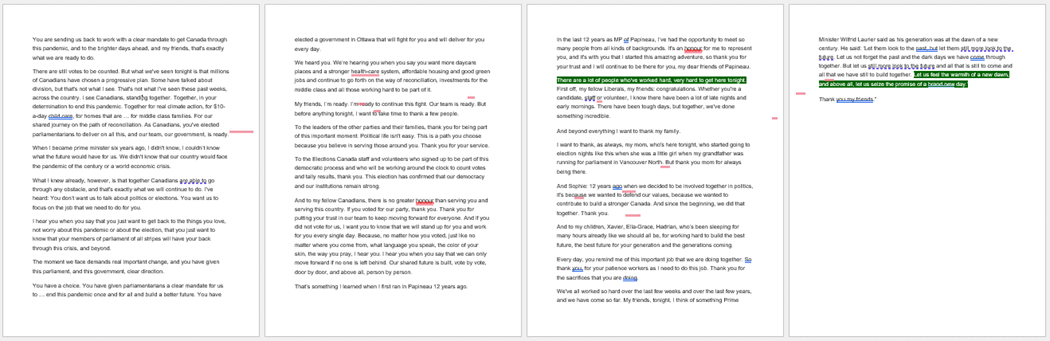
Justin Trudeau’s Last Victory Speech – Full of positivity.
This study provides an empirical investigation into Justin Trudeau’s most recent election victory speech. Through a rigorous data-driven analysis, it identifies and characterizes distinct linguistic features that play significant roles in the speech. It is worth noting that specific themes were addressed in the speech, bolstered by a substantial amount of richly descriptive language.
A salient linguistic characteristic evident in the speech is its ‘verboseness’. This is defined quantitatively as an elevated ratio of verbs, adverbs, and adjectives to nouns. Such a rhetorical strategy is frequently employed in persuasive or action-oriented political discourse, as it enhances narrative construction, imbues the speech with a dynamic quality, and imparts emotional depth to the discourse.
An example of this verboseness is the speech’s marked use of ‘stair-stepping’ adverbs, where successive adverbs are used to build up description or intensity. This pattern provides further evidence of the descriptive richness of the speech, supporting the claim of its verboseness.
The frequency distribution of words and phrases in the speech is complex, and not readily displayable through traditional visualization techniques. A sentiment analysis of the text reveals a significant presence of positive sentiment. This is in stark contrast to the more pragmatic and less emotionally expressive oratory style of his father.
Interestingly, a comparative analysis of the linguistic patterns employed by Justin Trudeau and his father reveals a divergence in their rhetorical styles. While beyond the scope of this current study, this raises intriguing questions about parental influence and its manifestation in speech patterns.


The linguistic tool will also highlight areas within the text that are high in positive or negative sentiment.
President Ronald Reagan’s 1986 Speech – ChatGPT Assessment.
This analysis of a 1986 speech by Ronald Reagan presents several interesting linguistic patterns and trends. Here’s an interpretation of your findings:
Negative Sentiment: The fact that the speech contains more negative sentiment might indicate that Reagan was addressing complex, challenging, or controversial issues. He may have been discussing an economic downturn, geopolitical tensions, national security concerns, or other problems facing the country. Depending on the context, this might suggest that he was trying to prepare the nation for difficult times, rally support for tough policies, or critique opponents’ positions.
This is interesting in that the data indeed supports this analysis since the president was indeed talking about some specific and important issues, from the economy to youth and drugs.
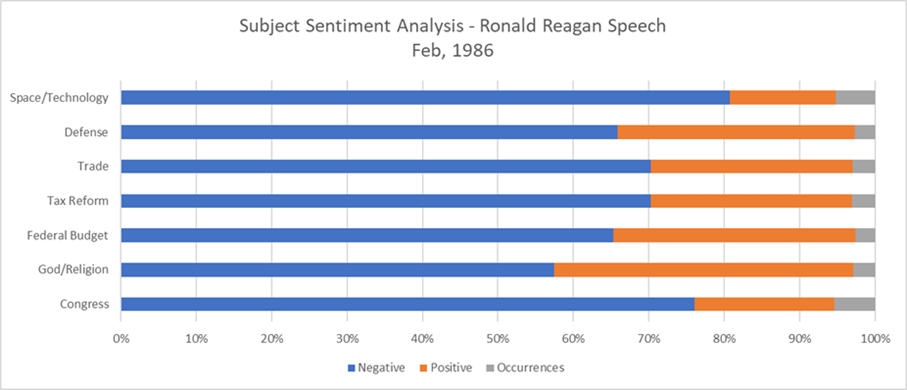
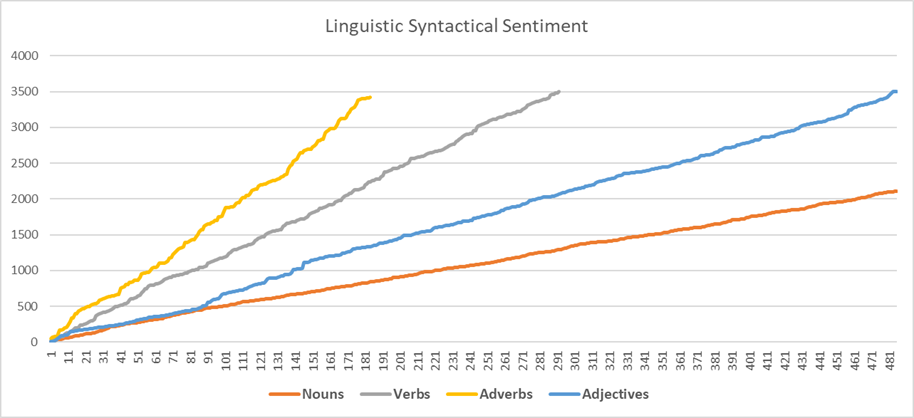
Positive Sections & Spacing: Despite the overall negative sentiment, the evenly spaced positive sections suggest a calculated rhetorical strategy. Reagan was known for his persuasive skills and his ability to inspire hope and optimism, even when discussing difficult issues. These positive ‘peaks’ could be a way of providing relief or reassurance, thereby maintaining audience engagement and morale.
Nouns & Adjectives: Your observation that nouns and adjectives mirror each other in volume and cadence, and then level off and remain linear, indicates a consistent and balanced usage of these parts of speech. This could reflect Reagan’s effort to paint a vivid, detailed picture of the circumstances he’s discussing4 while maintaining a steady and measured pace. This balance and pacing can be an effective way to convey complex ideas in a digestible manner.
Verbs & Adverbs: The lesser usage of verbs and adverbs compared to nouns and adjectives suggests that the speech might have been more focused on describing current situations, conditions, or entities rather than actions or changes. It could also indicate a preference for clarity and concreteness over abstraction or generalization, or a tendency to communicate more through exposition and illustration than through active narratives.
This again is true and supports this analysis’s value and accuracy as it is interesting in that the data indeed supports this analysis since the president was indeed talking in a manner of fact and not a lot of hyperbole.
Sentiment Document Tagging

Development Tools
Enhancing Linguistic Analysis with MS Office, VBA, Python, and OpenAI APIs
The methodology employed in this study is a testament to the fusion of diverse tools and technologies for sophisticated linguistic analysis. The integration of Microsoft Office applications, Visual Basic for Applications (VBA), Python, and OpenAI APIs facilitated a robust and detailed analysis process.
Microsoft Office and VBA
Microsoft Office, primarily Word and Excel, served as the foundational tools for text processing and data organization. Word was instrumental in basic text processing, including removing unwanted characters, checking spellings, and word counting. Meanwhile, Excel played a pivotal role in organizing the speech text data, facilitating pattern analysis and data visualization.
These applications were pushed to their limits and beyond what one might traditionally employ them for. For instance, Excel’s advanced functionalities, such as pivot tables, conditional formatting, and complex mathematical functions, were employed to analyze linguistic patterns and conduct frequency analyses.
To further enhance the process, VBA, a programming language native to Microsoft Office applications, was used to automate repetitive tasks and complex procedures. It enabled dynamic interaction between Word and Excel, such as importing text data, and performing computations that were beyond the native capabilities of these applications.
Python and OpenAI APIs
Python, a high-level programming language renowned for its simplicity and readability, was used for advanced linguistic analysis tasks. With its wide array of libraries for natural language processing (NLP), such as NLTK and Spacy, Python was employed for tasks including part-of-speech tagging, sentiment analysis, and lexical diversity analysis.
The integration of OpenAI APIs provided access to advanced machine learning models, notably the GPT (Generative Pretrained Transformer) models, renowned for their capability in understanding and generating human-like text. These models were used to enhance the deep linguistic analysis by offering insights into the syntactic and semantic aspects of Trudeau’s speeches.
Sentiment analysis was a crucial part of our methodology. For this, we developed a hybrid sentiment analysis system that integrates the best features from established lexicon-based systems and machine learning models. This system could be used standalone or integrated with Word and Excel through VBA and Python.
At its core, our sentiment analysis was based on lexicons – predefined lists of words associated with positive, negative, and neutral sentiments. These lexicons were combined with proprietary functions developed in Python to create a highly accurate sentiment scoring system. This hybrid approach allowed us to score each sentence in the speeches, providing valuable insights into the emotional tone of Trudeau’s public addresses.
Enhancing Linguistic Analysis with MS Office, VBA, Python, and OpenAI APIs
The methodology employed in this study is a testament to the fusion of diverse tools and technologies for sophisticated linguistic analysis. The integration of Microsoft Office applications, Visual Basic for Applications (VBA), Python, and OpenAI APIs facilitated a robust and detailed analysis process.
The Power of Microsoft Office, VBA and Visual Studio
Microsoft Office, primarily Word and Excel, served as the foundational tools for text processing and data organization. Word was instrumental in basic text processing, including removing unwanted characters, checking spellings, and word counting. Meanwhile, Excel played a pivotal role in organizing the speech text data, facilitating pattern analysis and data visualization.
These applications were pushed to their limits and beyond what one might traditionally employ them for. For instance, Excel’s advanced functionalities, such as pivot tables, conditional formatting, and complex mathematical functions, were employed to analyze linguistic patterns and conduct frequency analyses.
To further enhance the process, VBA, a programming language native to Microsoft Office applications, was used to automate repetitive tasks and complex procedures. It enabled dynamic interaction between Word and Excel, such as importing text data, and performing computations that were beyond the native capabilities of these applications.
Python and OpenAI APIs
Python, a high-level programming language renowned for its simplicity and readability, was used for advanced linguistic analysis tasks. With its wide array of libraries for natural language processing (NLP), such as NLTK and Spacy, Python was employed for tasks including part-of-speech tagging, sentiment analysis, and lexical diversity analysis.
The integration of OpenAI APIs provided access to advanced machine learning models, notably the GPT (Generative Pretrained Transformer) models, renowned for their capability in understanding and generating human-like text. These models were used to enhance the deep linguistic analysis by offering insights into the syntactic and semantic aspects of Trudeau’s speeches.
Conclusion
In summary, our methodology was a harmonious symphony of Microsoft Office’s flexibility, VBA’s automation capabilities, Python’s computational power, and the advanced AI offered by OpenAI APIs. The seamless integration of these tools enabled us to dissect Justin Trudeau’s speeches, providing fresh insights into his use of language and offering a new perspective on how public figures navigate complex public addresses. As technology continues to evolve, such innovative methodologies hold promise for even more nuanced understanding of human communication.
Through deep linguistic analysis, we gain fresh insight into public speeches, the subtleties of persuasion, and the art of rhetoric. Such analysis illuminates the complexities of political speech, and the dance of language that unfolds when a speaker experiences discomfort. It brings to light strategic language patterns and techniques employed to captivate the audience’s attention and manage challenging. In summary, our methodology was a harmonious symphony of Microsoft Office’s flexibility, VBA’s automation capabilities, Python’s computational power, and the advanced AI offered by OpenAI APIs. The seamless integration of these tools enabled us to dissect Justin Trudeau’s speeches, providing fresh insights into his use of language and offering a new perspective on how public figures navigate complex public addresses. As technology continues to evolve, such innovative methodologies hold promise for even more nuanced understanding of human communication.
While online sentiment analysis tools have made strides in understanding public sentiment, their limitations hinder their effectiveness and reliability. Expensive costs, reliance on user input, inconsistency, and vulnerability to deception are issues that need to be overcome. An advanced sentiment analysis system that incorporates the best features of existing methods, while addressing these challenges, offers a superior solution. With advanced capabilities to detect complexities like sarcasm, simplicity in usage, scalability, and adaptability to various scenarios, this system empowers businesses and organizations to gain meaningful insights from sentiment analysis, driving informed decisions and actions.
Linguistic analysis provides a valuable academic lens to investigate speech styles, offering insights into the patterns and techniques utilized by speakers. By examining linguistic features and delivery patterns, researchers gain a deeper understanding of how language is strategically employed to communicate, engage, and persuade. Such analyses enhance our comprehension of speech styles and contribute to various academic disciplines. With ongoing research, linguistic analysis will continue to unravel the complexities of human communication and shed light on the fascinating world of speech styles.
The integration of linguistic analysis, sentiment analysis, and considerations of honesty within speech analysis can provide a comprehensive understanding of the speaker’s communication style and the underlying emotional and truthful aspects of their message.
The integration of linguistic analysis, sentiment analysis, and considerations of honesty within the analysis of spoken language offers a valuable toolkit for understanding communication patterns and assessing the emotional impact and truthfulness of a speaker’s message. By systematically examining the proximity, volume, and cadence of linguistic elements, researchers gain insights into speech styles, emotional appeals, and potential indicators of credibility.
This comprehensive approach warrants further study and exploration. The complex interplay between linguistic features, sentiment, and honesty in spoken language requires in-depth investigation to refine methodologies, establish robust frameworks, and uncover new insights. Further research can delve into specific domains, such as political speeches, courtroom testimonies, or persuasive marketing, to explore how linguistic analysis enhances our understanding of communication dynamics and its influence on audience perceptions.
By expanding our understanding of linguistic patterns, sentiment, and honesty within spoken language, we can improve our ability to interpret, evaluate, and respond to various forms of communication. This research can have practical applications in fields such as public speaking, political discourse analysis, deception detection, and human-computer interaction.
Other Possibilities of Study
Context-specific analysis:
Applying linguistic analysis to specific domains or contexts offers a deeper understanding of how language is tailored to suit different communicative goals and audiences. Here are some examples of context-specific analysis:
Political speeches: Analyzing political speeches can unveil the rhetorical strategies employed by politicians to persuade, mobilize support, or convey political ideologies. Linguistic analysis can reveal patterns of language use, such as the use of emotionally charged words, rhetorical devices, or persuasive appeals, helping researchers and political strategists better understand the effectiveness of political communication.
Courtroom testimonies: Linguistic analysis can be applied to analyze courtroom testimonies, examining how linguistic features are utilized by witnesses, lawyers, or defendants to convey credibility, evoke empathy, or influence the perception of events. By studying linguistic patterns in legal discourse, researchers can explore the role of language in constructing narratives, framing arguments, and influencing legal outcomes.
Marketing and advertising: Linguistic analysis can contribute to understanding the persuasive techniques employed in marketing and advertising. By examining language use in advertisements, slogans, or promotional materials, researchers can identify linguistic features that capture attention, evoke emotions, or influence consumer behavior. This analysis can inform marketers about effective language strategies and help create more persuasive and engaging marketing campaigns.
Online communication: With the prevalence of online platforms, linguistic analysis can be applied to study various forms of digital communication, such as social media posts, online reviews, or chat conversations. Analyzing linguistic features in online discourse can reveal patterns of language use, sentiment, and persuasion, offering insights into online persuasion techniques, influence dynamics, and the impact of social media on communication patterns.
Historical Analysis: Linguistic analysis can be extended to historical speeches and texts, enabling researchers to explore the evolution of speech styles, linguistic changes, and the influence of historical and societal factors on language use. Here are some aspects of historical analysis:
Diachronic analysis: By comparing speeches and texts from different time periods, linguistic analysis can identify linguistic shifts and changes over time. Researchers can examine changes in vocabulary, syntactic structures, or rhetorical devices, providing insights into the historical development of speech styles and communication strategies.
Societal and cultural influences: Linguistic analysis can uncover how societal and cultural factors shape language use. Historical speeches can reveal shifts in political rhetoric, changing social norms, or cultural values. By studying the linguistic choices of influential figures throughout history, researchers can trace the impact of societal changes on speech styles and communication patterns.
Language preservation and revitalization: Linguistic analysis can contribute to the preservation and revitalization of endangered languages by documenting and analyzing historical speeches and texts. Researchers can examine linguistic features, language structures, and stylistic elements to better understand the linguistic heritage and support efforts for language revitalization.
Comparative analysis: Historical analysis allows for comparative studies across different periods and regions. Researchers can compare speeches from different historical contexts to uncover similarities, differences, or cross-cultural influences in speech styles and communication strategies. Comparative analysis can reveal universal patterns as well as unique linguistic features specific to certain time periods or geographical areas.
In light of the significance and potential impact of this interdisciplinary approach, further study is essential to refine existing methodologies, explore new avenues of analysis, and validate findings across different contexts and languages. Advancing our understanding of spoken language through linguistic analysis and its integration with sentiment analysis and considerations of honesty can equip us with valuable tools to comprehend the intricacies of human communication more deeply.
In summary, the integration of linguistic analysis, sentiment analysis, and considerations of honesty provides a comprehensive toolkit for understanding speech patterns, emotional impact, and truthfulness. By analyzing the proximity, volume, and cadence of linguistic elements, researchers gain valuable insights into communication styles, sentiment, and credibility. Linguistic analysis complements other data and observations, strengthening the overall analysis and supporting robust conclusions about speech patterns and styles. Incorporating sentiment analysis helps assess the emotional impact of linguistic elements, while considerations of honesty contribute to evaluating the truthfulness and transparency of a speaker’s statements. This integrated approach warrants further study to refine methodologies, explore new applications, and deepen our understanding of human communication. It holds practical implications in various fields, from public speaking to deception detection, and encourages ongoing research to advance our knowledge of linguistic patterns, sentiment, and honesty within spoken language.
Additional Reports from Studies:



 marksdeepthoughts.ca
Leave a comment